
High School Isn’t a College Application
Discovery, Depth, and Becoming Someone—Not Just Getting In

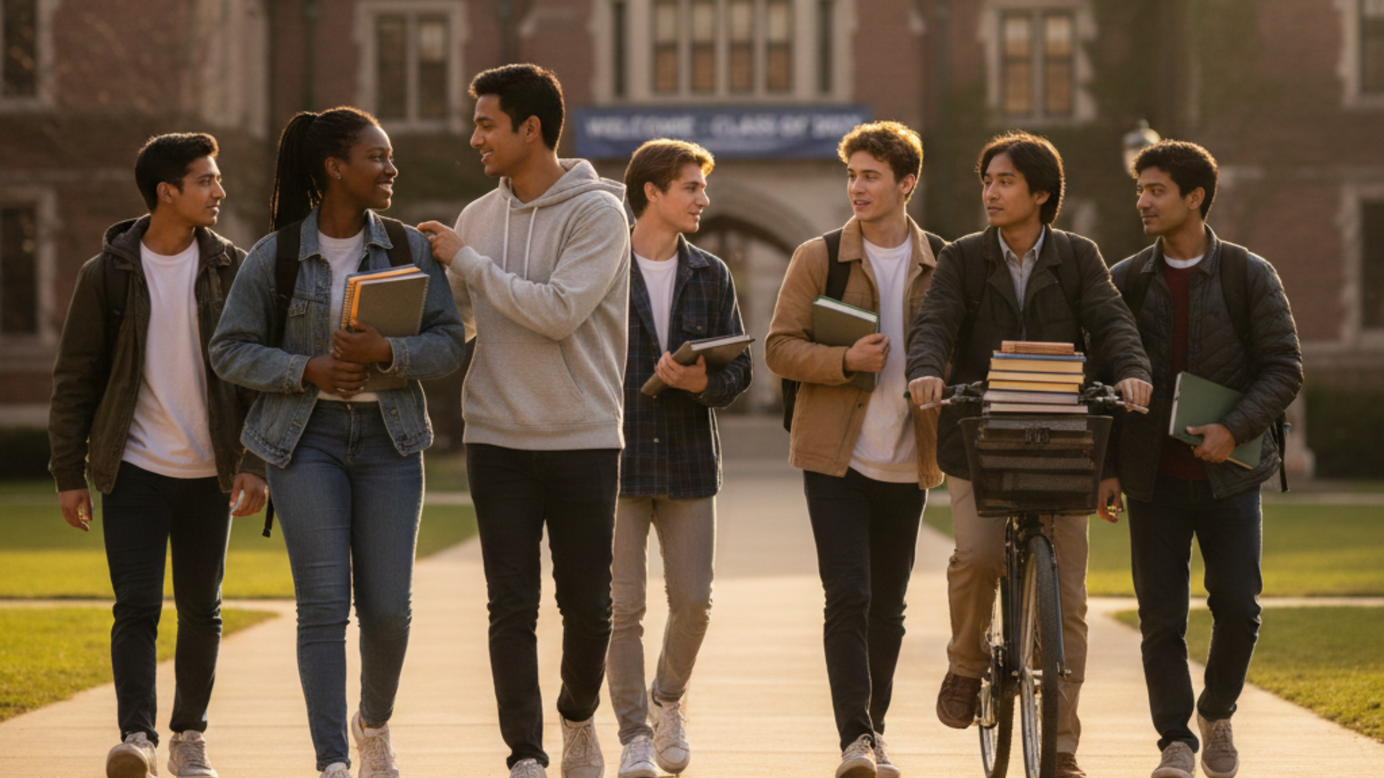
High school is no longer just a runway to college.
It is a critical stage of discovery, where students begin to understand who they are, what they care about, and how their abilities might take shape in the world. Yet for many families, this season quietly gets hijacked by a single gravitational force: college admissions.
Before going any further, it’s important to clarify what giftedness means at GiftedTalented.com.
By giftedness, we mean the early signs of distinctive potential—intellectual, creative, relational, athletic, or entrepreneurial—that deserve intentional discovery and development, not just measurement.
With that understanding, high school looks very different from a checklist of achievements. It becomes a formative chapter that shapes identity, direction, and purpose long before acceptance letters arrive.
When Efficiency Replaces Formation
The Common Application has transformed college admissions. It reduced friction, expanded access, and simplified what was once a fragmented and repetitive process. These gains matter.
But something subtler has shifted alongside that efficiency.
For those who remember, before standardized digital applications, applying to college was slow, imperfect, and deeply personal. Essays were typed or handwritten. Deadlines felt physical. Families were involved. Applying to each school required effort, intention, and often conversation.
Today, students can apply to a dozen or more schools with a few clicks.
The result is not just more applications, but less reflection.
When the process becomes frictionless, discernment is often the first casualty.
The Hidden Cost for Gifted and High-Potential Students
For students with real gifts, especially those whose abilities don’t fit neatly into standardized categories, the current system creates a paradox.
On one hand:
- There are more opportunities than ever
- More programs, competitions, and enrichment pathways
- More geographic and institutional access
On the other:
- Competition has intensified dramatically
- Essays begin to sound the same
- Extracurriculars become performative
- Students feel pressure to optimize instead of explore
Many gifted students don’t struggle because they lack ability.
They struggle because they’re pushed to package themselves before they’ve had time to understand themselves.
High school becomes about signaling readiness rather than cultivating depth.
High School Is Not an Application Factory
High school was never meant to function as an application assembly line.
It is meant to be a formation space—a protected season where students can:
- Discover genuine interests (not résumé fillers)
- Deepen a small number of talents with seriousness
- Learn how to think, not just how to perform
- Begin forming identity, values, and convictions
- Experiment safely before adult consequences arrive
College admissions should be a byproduct of this process, not the driver of it.
When students build their lives backward from application prompts, something essential gets lost.
Reclaiming Depth in a Standardized System
The Common App is not going away—and it shouldn’t. Efficiency and access matter.
But families still have agency in how they engage with it.
Here are healthier ways to navigate high school in this era:
1. Choose Depth Over Volume
Applying to fewer schools, intentionally, forces clarity.
Why this school? Why this path? Why now?
Those questions matter more than rankings.
2. Build a Narrative, Not a Checklist
Colleges are not looking for twenty disconnected activities.
They’re looking for curiosity, direction, and commitment over time.
3. Use Supplements to Tell the Real Story
Standardized prompts invite standardized answers.
Supplemental essays and open-topic opportunities are where authenticity still breaks through.
4. Treat High School as Identity Work
This is the last low-risk season to ask meaningful questions:
- What do I enjoy doing when no one is watching?
- What problems pull me in emotionally?
- Where do my abilities and compassion intersect?
Those answers last far longer than any acceptance letter.
A Better Question Than “Where Will You Get In?”
For parents and students alike, the most important question is not:
Where will this student get in?
It is:
Who is this student becoming?
College is not the destination.
It is a tool.
High school is where direction is set.
And in a world that increasingly rewards speed, sameness, and surface-level achievement, the quiet work of developing real gifts into real talents may be the greatest advantage of all.
A Final Word for Families
The Common App may have streamlined applications, but meaning still requires effort.
High school students don’t need to be more impressive.
They need to be more themselves.
Our role—as parents, educators, and mentors—is to protect that space of discovery, deepen authentic talents, and help young people step into adulthood with clarity, confidence, and purpose.
That is success—no matter where the envelope lands.

GiftedTalented.com
The world's fastest growing gifted & talented community