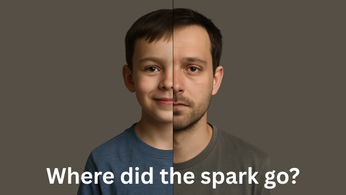

Healthy Defiance: A Critical Life Skill You Must Teach Your Child
Cornell Research on How Small Acts of Principled Disagreement Build Ethical Self-Advocacy and Lifelong Confidence in Children.

Compliance Trap
Why Obedience Alone Undermines High Potential
Parents of high-achieving kids often prioritize smooth performance. Compliance makes life easier: better grades, fewer conflicts, and a home that runs on predictable routines.
But here’s the hidden cost:
The same compliance that makes childhood convenient can leave your child vulnerable as an adult.
According to organizational psychologist and Cornell professor Sunita Sah, who researches the science of saying no, many parents over-train their children to be agreeable, deferential, and quiet. This creates kids who perform beautifully in structured environments—yet become adults who struggle to:
- Set boundaries
- Advocate for themselves
- Resist peer or authority pressure
- Speak up when something feels wrong
In her research, Sah argues that healthy defiance is not a flaw—it’s a critical life skill. Gifted children especially need it. These children often pick up subtle expectations to be “the good one,” “the responsible one,” or “the easy one”—and obedience becomes part of their identity.
That identity can backfire.
The Backfire Effect
When “Good Kid” Turns Into Unhappy Adult
When children equate being “good” with being silent or agreeable, they often become adults who:
- Say yes when they desperately want to say no
- Tolerate mistreatment or unreasonable expectations
- Feel guilty for standing up for themselves
- Prioritize others’ comfort over their own dignity
For high-achievers, this pattern often shows up as:
Boundary Failure
They take on too much, burn out easily, and feel responsible for others' approval.
Ethical Silence
They witness something unfair but stay quiet, lacking practice in respectful confrontation.
Compromised Self-Esteem
They internalize the message that their needs matter less than harmony or performance.
This is why Sah argues that practicing healthy defiance protects a child’s long-term confidence, integrity, and wellbeing.
A Real-World Parallel
Why Moderately “Disagreeable” People Rise Further
Psychologist Jordan Peterson often cites a striking insight from personality research:
Moderately disagreeable people—those willing to assert boundaries, negotiate, and challenge unfair expectations—tend to achieve more success.
Not because they’re rude.
Not because they enjoy conflict.
But because they are willing to experience discomfort in the service of their values.
Agreeable individuals (the harmony-seekers) frequently:
- Undervalue themselves
- Avoid necessary conflict
- Accept unfair situations
- Say yes to everything, even when it harms them
Children—who often lean toward agreeableness—are especially prone to this pattern.
Healthy defiance is the antidote.
Teaching a child to assert themselves respectfully equips them with the same traits that predict leadership, negotiation strength, and professional resilience. When kids learn to voice their boundaries early, they become adults who aren’t easily manipulated, guilted, or pushed into silence.
This is the real-world value of principled pushback.
What Healthy Defiance Really Looks Like
Healthy defiance is not shouting, disrespect, or rebellion.
It is the calm, values-aligned ability to:
- Question gently
- Disagree respectfully
- Correct errors thoughtfully
- Say no when something feels wrong
It is assertive disagreement that stays within ethical and relational boundaries.
Examples include:
- A child saying, “I don’t think that’s correct—may I explain?”
- A teen refusing peer pressure, even if it costs them social points
- A child setting a boundary around their own space or comfort
These are not signs of defiance to be punished.
They are signs of a voice being formed.
3 Ways Parents Can Build the Muscle of Principled Pushback
Parents are uniquely positioned to model, teach, and cultivate this skill intentionally.
1. Build Micro-Practice at Home
Compliance is habitual; so is self-advocacy.
Give your child small, low-stakes opportunities to practice saying “no”:
- Let them decline certain foods or activities without being labeled “difficult.”
- Encourage them to respectfully challenge factual errors.
- Allow them to negotiate boundaries around their time and preferences.
When pushback is safe, they learn to use it when it counts.
2. Teach Through Reflective Language
After a conflict or a moment of discomfort, ask questions that build ethical reasoning:
- “What didn’t feel right to you?”
- “What do you wish you had said?”
- “What boundary mattered to you in that moment?”
- “What would you do differently next time?”
This reflection helps children refine their internal compass—the “why” behind their defiance.
It separates impulsive rebellion from principled action.
3. Role-Model Assertiveness Under Pressure
Your child learns more from how you navigate conflict than from what you say about it.
Small real-life examples matter:
- Correct an incorrect restaurant order politely instead of silently accepting it.
- Tell your supervisor you cannot take an after-hours task due to a family commitment.
- Set boundaries in friendships instead of quietly absorbing discomfort.
These everyday choices show your child:
“It’s okay to inconvenience others slightly to protect what matters.”
Your behavior becomes their future blueprint.
The Protective Factor You Don’t Want to Miss
We want our children to be:
- Independent thinkers
- Ethical leaders
- Courageous advocates
- Boundaries-setters
- Resilient adults
None of this emerges from perfect obedience.
It emerges from learning to speak up, even when it’s uncomfortable.
By allowing your child to question, disagree, negotiate, and respectfully say no, you’re not losing control—you’re building their future strength.
You’re raising:
- A teenager who won’t succumb to toxic peer pressure
- A young adult who can walk away from exploitative relationships
- A professional who knows their worth
- A leader who challenges unethical norms
You’re raising someone with a voice they can trust.
Not just a conformist.

GiftedTalented.com
The world's fastest growing gifted & talented community