Maieutic Education: An Ancient Idea for an Uncertain Age
Why learning that draws out gifts matters more than ever in an age of AI

The word maieutic may sound academic, but its origins are deeply human.
It comes from the ancient Greek maieutikē—the art of midwifery.
Long before it became associated with learning and philosophy, maieutics referred to those who helped bring life into the world. A midwife did not create the child. She did not decide what the child would become. Her role was to assist, protect, time, and draw out what already existed.
That metaphor—childbirth as a model for learning—may be one of the most powerful ideas education has ever known.
Learning as Birth, Not Insertion
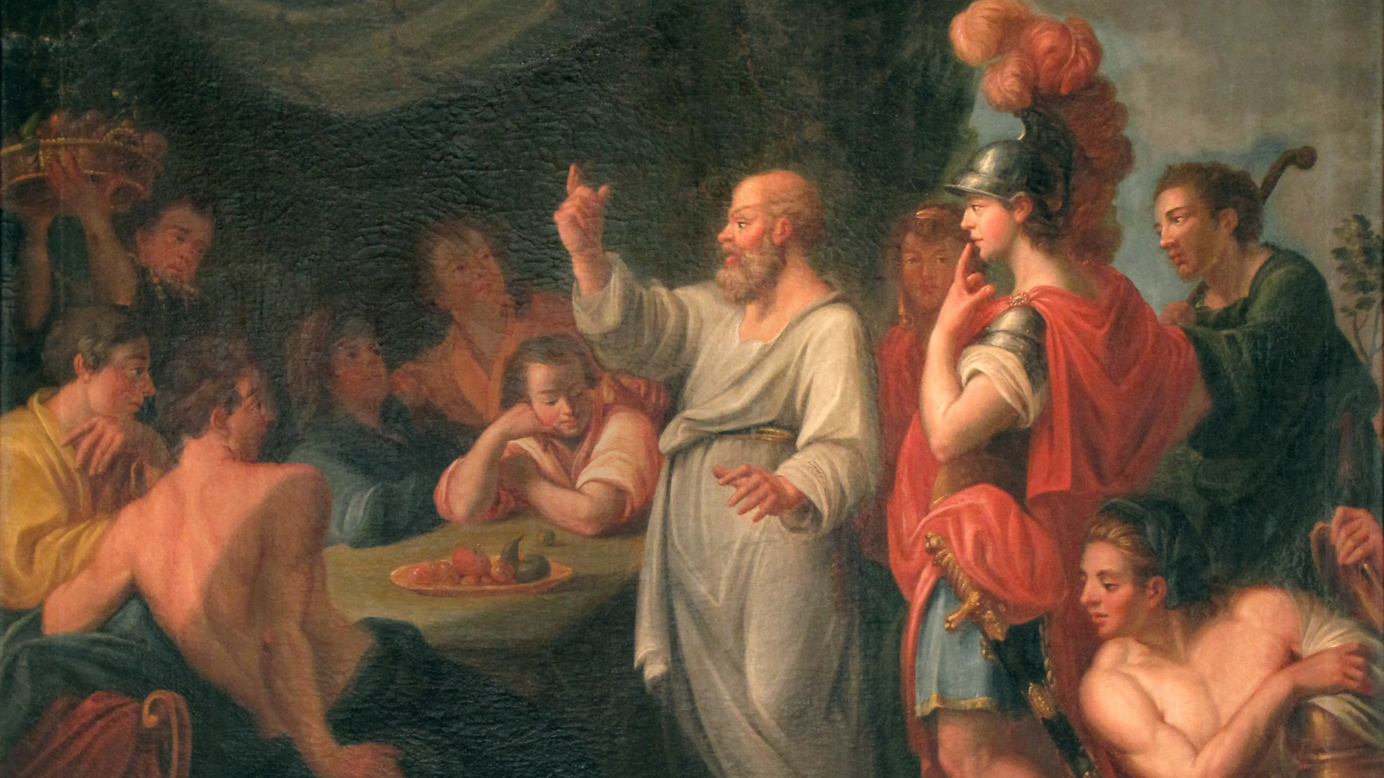
The idea entered education most famously through Socrates, who described himself not as a teacher, but as a midwife of ideas.
Socrates believed that:
- Truth is not transferred from expert to student
- Knowledge is not injected through lectures
- Understanding already exists in latent form
The role of the educator, then, is to draw it out—through questions, dialogue, reflection, and struggle.
This is a radically different view of education than the one most of us inherited.
Modern schooling often treats children as empty containers:
Fill them with facts.
Push them toward outcomes.
Standardize the process.
Maieutic education begins from the opposite assumption:
There is already something there.
Our task is to discover and nurture it.
The Forgotten Wisdom of Midwives: Story as Formation
There’s a detail about midwifery that rarely gets mentioned, but matters deeply for education.
Historically, midwives didn’t just assist physically.
They told stories.
Stories:
- to calm fear
- to create rhythm
- to reduce pain
- to help the mother stay present
In other words, they understood something modern education often forgets:
Formation is emotional and narrative, not just technical.
The mind, like the body, resists force.
But it opens under trust, meaning, and story.
This is why gifted talented children—especially sensitive, intense, or non-linear thinkers—often shut down under pressure, yet flourish in environments of dialogue, imagination, and respect.
Gift-Based Education Starts With Potency, Not Pressure
At GiftedTalented.com, we often say this quietly but clearly:
Gift-based education is not about forcing change.
It is about drawing out existing potency.
A child does not need to be “fixed.”
They need to be seen.
They don’t need to be pushed into predefined success tracks.
They need help discovering what is already alive within them—and learning how to steward it.
This matters more than ever.
AI, Work, and the Collapse of Old Assumptions
Many parents grew up with a narrow definition of success.
I certainly did.
My parents used to say:
“Pick one—doctor or lawyer.”
It wasn’t cruelty. It was love filtered through fear.
Those professions represented:
- security
- social respect
- stability
But that world is dissolving.
In an age where AI can:
- draft legal briefs
- read medical scans
- outperform humans in narrow technical tasks
The illusion of safety through credentials is breaking.
What AI cannot replicate (at least not meaningfully) are:
- judgment
- moral reasoning
- creativity
- sense-making
- wisdom
- vocation
These do not come from force.
They come from formation.
Maieutic education prepares children not for a disappearing job market, but for a world that needs self-aware, grounded, discerning humans.
How I First Encountered Maieutic Education
I didn’t encounter maieutics first in a philosophy book.
I encountered it through my mentor and investor, CK Lee, founder of Creative Maieutic School (CMS).
CMS is widely regarded as Korea’s leading gifted education program, and has been responsible for nurturing Korea’s International Mathematical Olympiad (IMO) champions for over a decade.
What struck me was not the results (impressive as they are).
It was the posture.
CMS does not treat gifted children as raw material to be optimized.
It treats them as persons to be understood.
The work is slow.
Dialogical.
Deeply respectful.
Students are not pushed into excellence.
They are drawn toward it, once their inner logic is discovered.
That encounter fundamentally reshaped how I think about learning, giftedness, and human development.
Discovery Before Direction
Maieutic education insists on an ordering most systems get wrong:
- Discovery – What is already present?
- Nurture – How do we protect and develop it?
- Direction – Only then do we guide toward paths and outcomes
When we reverse that order—when we push direction before discovery—we create anxiety, resistance, and burnout.
When we honor it, children don’t just perform better.
They become more whole.
A Final Word to Intentional Parents
If you are an intentional parent, the question is not:
“How do I push my child to succeed?”
The better question is:
“What is already alive in my child—and how do I help bring it fully into the world?”
Maieutic education reminds us that the most important work is not acceleration, optimization, or credentialing.
It is midwifery.
Helping something precious, fragile, and powerful be born—
at the right time,
in the right way,
with care rather than force.
That has always been the work of great educators.
And in an age of AI, it may be the most human work left.

GiftedTalented.com
The world's fastest growing gifted & talented community