
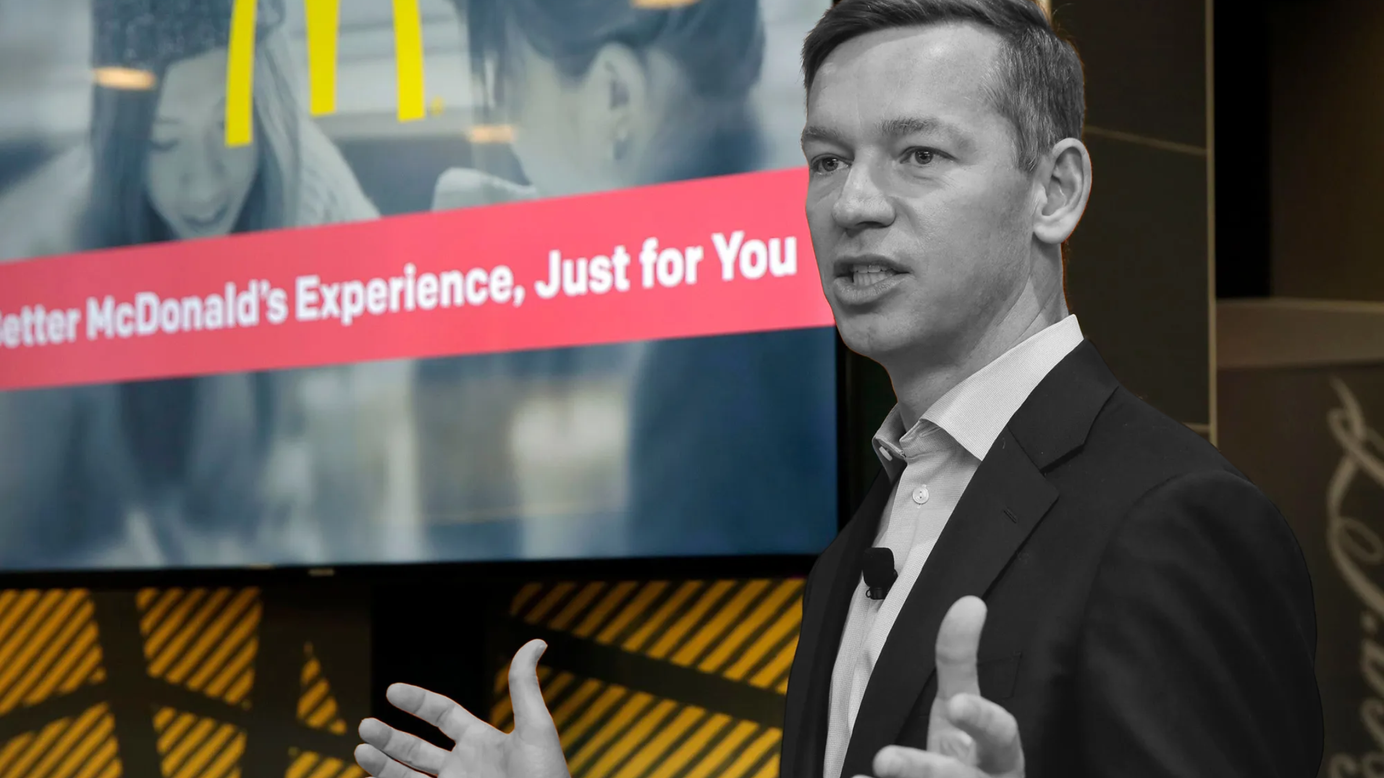
McDonald’s CEO Says “Nobody Cares About Your Career”
Uncomfortable lesson for how we prepare children for work, agency, and adulthood.

When McDonald’s CEO Chris Kempczinski said, “Nobody cares about your career as much as you do,” the line went viral because it felt cold.
But it wasn’t cruel.
It was clarifying.
Kempczinski wasn’t attacking workers. He was naming a structural shift: the old employment deal—loyalty in exchange for steady advancement—has quietly collapsed. Companies optimize for markets. Careers are now modular, nonlinear, and self-directed.
What struck me wasn’t how employees reacted.
It was how parents should.
The childhood pipeline that prepared us no longer exists
I had a part-time job at fourteen.
It wasn’t glamorous. But it taught me something school never did:
- how adults evaluate effort
- how reliability compounds
- how work connects to dignity, not identity
That on-ramp is mostly gone.
Between liability concerns, academic pressure, hyper-scheduled enrichment, and a service economy that no longer hires teens at scale, many kids now move from school → college → workforce without ever touching real economic responsibility.
And then we’re surprised when they expect careers to be assigned rather than constructed.
The employer’s message reveals a parental gap
Kempczinski’s message lands hard because it exposes a vacuum:
If companies won’t manage careers…
and schools were never built to…
who teaches career ownership?
The uncomfortable answer is: parents now carry far more of that load than previous generations ever did.
Not as résumé engineers.
Not as pressure amplifiers.
But as architects of early agency.
Career ownership is a skill and it starts earlier than we think
Career ownership isn’t hustle culture.
It’s not grind.
It’s not “figure it out alone.”
It’s the slow accumulation of four capacities:
- Self-direction
Choosing what to pursue without waiting for permission. - Market awareness
Understanding how value is created and rewarded in the real world. - Skill compounding
Learning that small, boring competencies stack over time. - Psychological durability
Knowing no system owes you momentum — you generate it.
These aren’t taught by grades.
They aren’t taught by credentials.
They’re taught by exposure.
The paradox for high-achieving families
Affluent, achievement-oriented families often do everything right—
and still accidentally delay these lessons.
We protect.
We optimize.
We remove friction.
But friction is where agency forms.
Elite schools cultivate excellence.
They are less reliable at cultivating ownership unless parents are intentional.
Without that counterbalance, children internalize a dangerous myth:
If I do everything I’m supposed to do, someone will notice and take care of the rest.
That myth used to be partially true.
It no longer is.
What intentional parents can do instead
You don’t need to recreate a 1990s summer job economy.
But you do need to create real stakes early.
That might look like:
- letting teens sell, teach, build, or ship something imperfect
- exposing them to adults who talk openly about work tradeoffs
- normalizing rejection, feedback, and iteration
- framing education as capability building, not protection
The goal isn’t independence for its own sake.
The goal is earned confidence.
Confidence that doesn’t depend on institutions caring.
Because they won’t.
And they never truly did.
The deeper lesson hidden in “nobody cares”
Kempczinski’s line isn’t nihilism.
It’s an invitation:
- to stop outsourcing formation
- to stop confusing excellence with readiness
- to stop assuming systems will substitute for agency
For workers, it’s a wake-up call.
For parents, it’s a design challenge.
And for kids, if we do this right, it becomes something else entirely:
Not fear.
But freedom.

GiftedTalented.com
The world's fastest growing gifted & talented community