What Elite Schools Must Teach Beyond Excellence
Elite schools in Singapore spark reflection on privilege, insulation, and the responsibility of raising grounded, humane leaders.

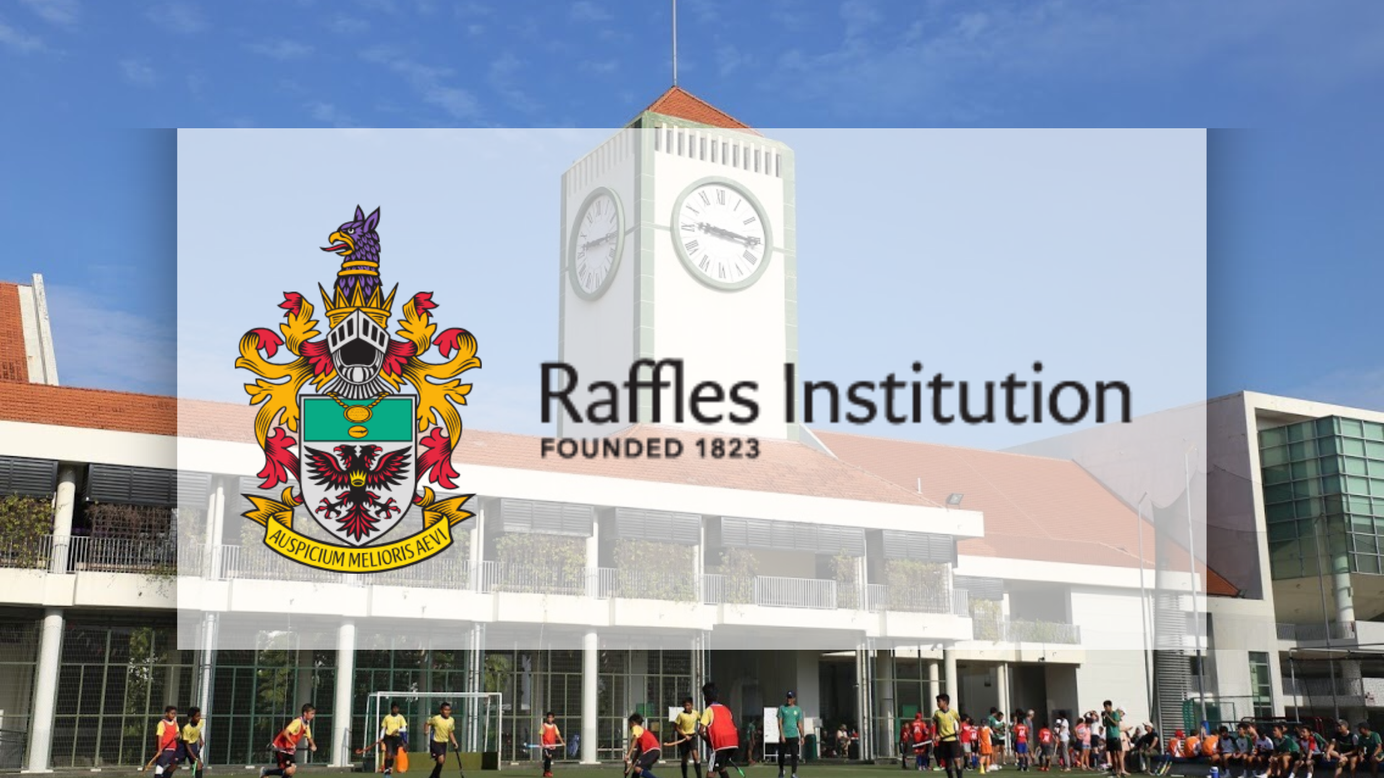
The recent debate around Singapore’s elite schools (sparked by a former student’s viral reflection) has reopened an old question with new urgency:
If privilege is real, what are we supposed to do with it?
Some have taken the moment to argue that elite schools themselves are the problem—that they should be dismantled, diluted, or morally discredited. I think that conclusion is too narrow, and ultimately unhelpful.
Privilege exists.
But eliminating elite schools is not the same thing as cultivating perspective.
The real issue isn’t excellence. It’s insulation.
What the viral story revealed was not academic rigor gone wrong, but social insulation.
When a child grows up surrounded only by peers who travel frequently, live in private housing, and move through the world with invisible safety nets, their sense of what is “normal” quietly shifts. Not out of malice. Not out of arrogance. But out of exposure.
That distortion matters.
Not because wealth is shameful.
But because a narrow reality produces narrow empathy.
Elite schools are exceptionally good at developing cognitive talent, discipline, and ambition. What many have not done well (at least historically) is cultivate social imagination: the ability to understand lives, constraints, and responsibilities beyond one’s immediate bubble.
That is a fixable problem.
Diversity of schools is not a flaw. It’s a feature.
A healthy education ecosystem needs different kinds of schools, just as a healthy society needs different kinds of people.
- Schools optimized for academic intensity
- Schools rooted in neighborhoods and community continuity
- Schools that emphasize arts, trades, or applied learning
- Schools that stretch the gifted, and schools that stabilize the vulnerable
Trying to flatten these differences in the name of equality often produces sameness; not justice.
The question is not whether elite schools should exist.
The question is whether they understand their role in the larger ecosystem.
Perspective must be taught—on purpose.
Perspective does not emerge automatically from intelligence.
It has to be:
- Modeled
- Practiced
- Expected
This means elite schools need to move beyond symbolic gestures of “exposure” and ask harder questions:
- How do we ensure students regularly encounter lives unlike their own?
- How do we teach that advantage creates responsibility, not entitlement?
- How do we frame success as stewardship, not just personal ascent?
These are not political questions.
They are formative ones.
Where collective responsibility used to be learned
Historically, institutions like churches, temples, and civic organizations played a powerful role in teaching collective responsibility—the idea that your life is connected to the well-being of others, even when there is no immediate benefit to you.
I’m not naïve enough to argue that religion is the only answer.
It isn’t.
But I do think something important has been lost as our culture has become increasingly individualistic:
- My child
- My outcome
- My advantage
- My success
We’ve become very good at optimizing backyards.
Much worse at tending gardens.
A gardener’s mindset for the next generation
A gardener understands something a maximizer often forgets:
You don’t control everything.
But you are responsible for what you cultivate.
Teaching children, especially gifted and advantaged ones, to think like gardeners means helping them see:
- Their education as a trust, not just a credential
- Their networks as tools for service, not just leverage
- Their success as something that shapes the environment around them
This is not about guilt.
It’s about maturity.
The path forward
Elite schools should not disappear.
They should grow up.
Not by lowering standards, but by widening vision.
Not by rejecting excellence, but by anchoring it in responsibility.
Not by pretending privilege doesn’t exist, but by teaching what it’s for.
If we want a future led by capable, humane, and grounded adults, perspective cannot be optional.
It must be part of the curriculum—explicitly, intentionally, and courageously.
That is work worth doing.
GiftedTalented.com
The world's fastest growing gifted & talented community