"I’m an American Raising My Son in Denmark"
Parenting in Denmark Feels Easier. America has much to learn from the way children are trusted and treated.

The Silence That Wasn’t Silence
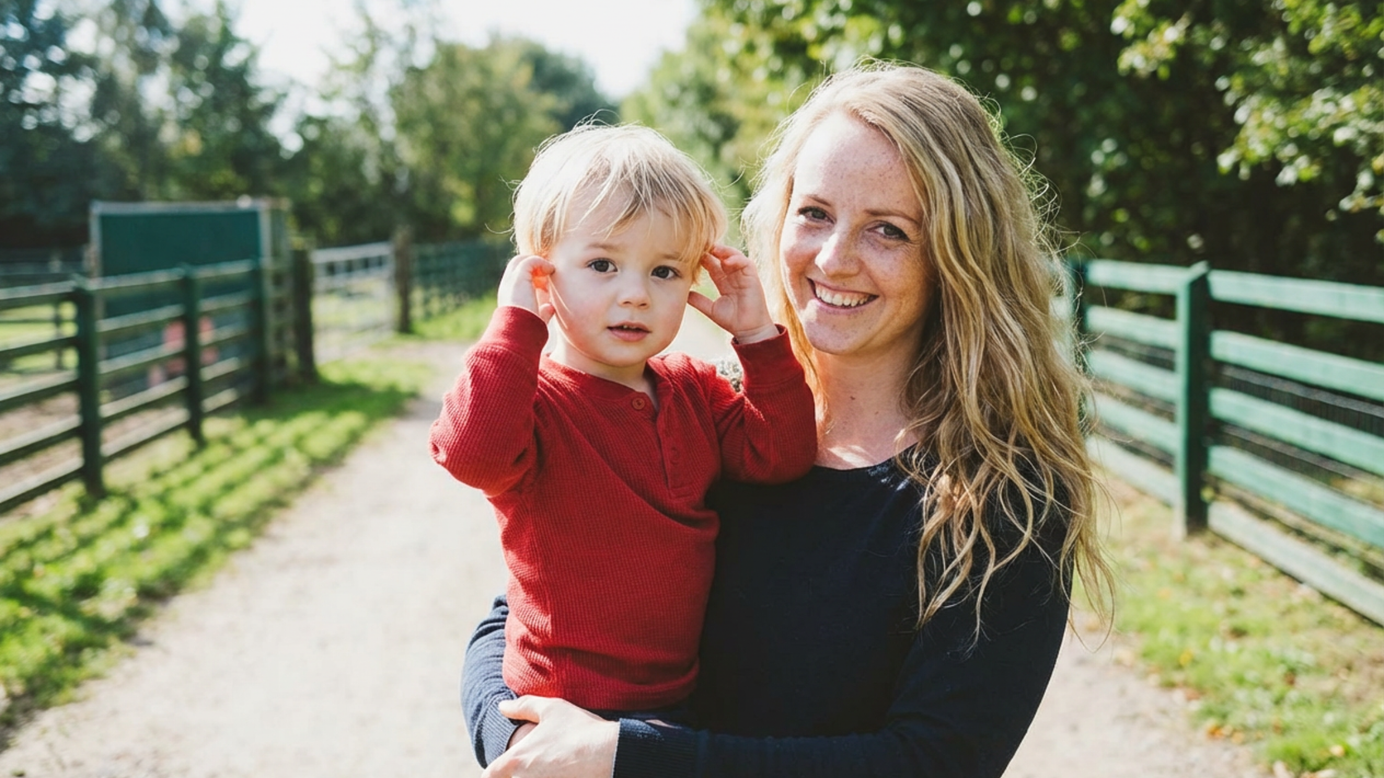
The morning Sarah McCullen stepped out of her narrow Copenhagen apartment with her toddler, Jack, she was struck by the quiet.
Not the absence-of-sound kind.
The absence-of-panic kind.
Bikes flowed past like a steady river—upright riders, unhurried faces. A preschool group shuffled down the sidewalk in neon vests, small bodies bumping gently into one another. One adult led. Another followed. No one barked instructions. No one clutched a hand like a life raft.
Back home in Ohio, Sarah’s days had been a choreography of control.
Five-point harness for a three-minute drive.
A firm grip crossing parking lots.
Playground signs listing everything children couldn’t do—for safety.
She could still feel the phantom weight of American fear (e.g., the white van, the lawsuit, the breaking-news alert) even as she watched a Danish mother tuck a baby into a cargo bike, pull a blanket up to the chin, and pedal off into the crisp Nordic air.
The Café Moment That Changed Everything
The first real shock came outside a café.
Sarah froze mid-sip when she noticed three prams lined neatly along the window. Inside each, a baby slept peacefully in the cold air. Their parents sat inside with coffee and pastries, glancing out now and then, not with frantic vigilance, but the way one checks the weather.
In the United States, Sarah knew, this scene would have triggered a police call. Or a viral post. Or both.
Here, it was just Tuesday.
When she asked a Danish friend about it later, the woman shrugged.
“Babies sleep better outside,” she said. “And no one is going to take your child. Why would they?”
The question landed gently yet powerfully.
A System That Assumes Parents Are Human
That trust showed up everywhere.
At Jack’s vuggestue ("daycare") the staff greeted him at the door and gently waved Sarah off by 8:30 a.m.
“Go to your Danish class,” they said. “Or just enjoy a walk.”
Fees were modest. Paperwork was centralized. The waiting list had been handled without pleading, begging, or frantic spreadsheets.
For the first time in her parenting life, logistics felt like scaffolding, not a test.
When Sarah picked Jack up later, his cheeks were flushed. His pants were muddy. The teachers beamed as they explained the children had spent hours outside—climbing logs, banging pots in an outdoor kitchen, and learning to zip their own coats.
Where Risk Is Treated as a Teacher
On a drizzly November afternoon, Sarah arrived early and stood under an awning to watch.
The playground was fenced, but within it, the children roamed freely.
A boy wielded a stick like a sword.
Another balanced along a wet beam.
Two girls argued over a plastic truck—their voices rose, then fell.
A teacher hovered nearby, attentive but hands-off.
In the US, Sarah knew this would have been interrupted.
Mediated.
Redirected.
Here, conflict and risk weren’t contaminants.
They were ingredients.
“I keep wanting to say, ‘Be careful,’” Sarah admitted later.
The teacher smiled.
“We say ‘try’ more than ‘be careful,’” she said. “If we shout all the time, children learn our fear instead of their instincts.”
Evenings Without Optimization
The culture followed them home.
Back in Ohio, evenings had been optimized. Baby classes. Enrichment workshops. A calendar full of things that looked like good parenting.
In Denmark, evenings softened.
Friends invited Sarah and Jack over for dinner. Candles flickered on low tables. Phones stayed out of sight. The children smeared rye bread with butter or stacked wooden blocks while adults talked.
No one apologized for the lack of activities.
This, they seemed to say, was the activity.
A Candle, a Match, and a Quiet Nod
One Friday night, Sarah watched as her friend’s seven-year-old lit the candles.
His hand trembled slightly as he struck the match.
No one gasped.
No one lunged.
When he finished, his father nodded.
“Tak.”
The boy glowed brighter than the flame.
This wasn’t neglect.
It was trust, made visible.
Calm Is Not a Personality Trait
Danish parents were deeply involved, just not frantic.
Generous parental leave meant many had actually been home during their children’s first year. Shorter workweeks and family-first norms made it possible to linger at pickup, to sit through dinner without a laptop humming nearby.
Calm wasn’t a virtue parents had to manufacture.
It was structural.
When Fear Stops Narrating the Day
As months passed, Sarah felt something in herself loosen.
She stopped narrating worst-case scenarios every time Jack climbed higher or disappeared briefly behind a play structure.
On the metro, she noticed older children riding alone—backpacks slung casually, phones untouched. No one asked where their parents were.
Competence, not fear, was the default assumption.
The Question That Wouldn’t Go Away
Still, the old anxiety flared.
On a video call with her sister back home, Sarah mentioned that Jack’s daycare sometimes built small fires so children could bake bread on sticks.
“Open fires?” her sister asked. “In a preschool?”
Sarah laughed. But the question lingered.
Why did one country treat a bonfire as a childhood memory…
and another as a liability risk?
Designed for Trust, Not Bravery
The answer, Sarah realized, wasn’t courage.
It was design.
Healthcare. Childcare. Public spaces that felt genuinely safe. A society that didn’t force parents into constant vigilance.
Without scarcity humming in the background, childhood could be seen as a protected season—not a race.
Listening Instead of Checking
One windy spring afternoon, Sarah biked with Jack along a quiet street, his small voice singing nonsense songs into the breeze.
She thought of the car-seat mirror she once used to keep his face constantly in view.
Here, she was mostly listening to his voice, to the whir of tires, to her own breathing slowing down.
“They’ll Come Back When They’re Hungry”
Later that year, at a neighborhood gathering, Sarah watched a group of children disappear into a stand of trees at the edge of a playground.
No timed check-ins.
No adult escort.
A father beside her said casually,
“They’ll come back when they’re hungry.”
The sentence carried the weight of an entire philosophy.
A Different Picture of the Future
Raising a child in Denmark didn’t make Sarah a perfect mother.
She still lost her temper.
Still checked the monitor too often.
Still read parenting forums that somehow made even Danish calm feel competitive.
But living inside a culture that assumed children were capable (and communities existed to support families) changed her starting point.
When she pictured Jack’s future now, it wasn’t framed by test scores or college tours.
It looked more like that forest at the edge of the playground:
Bounded, but open.
Watched over, but not surveilled.
A place where Jack could fall, argue, light candles, build fires, and someday walk into town on his own...
...Sarah standing just far enough back for him to feel free, close enough for her heart to race...
...learning that courage in parenting sometimes looks like doing less, not more, and that trust, once practiced, can be stronger than fear.

GiftedTalented.com
The world's fastest growing gifted & talented community