
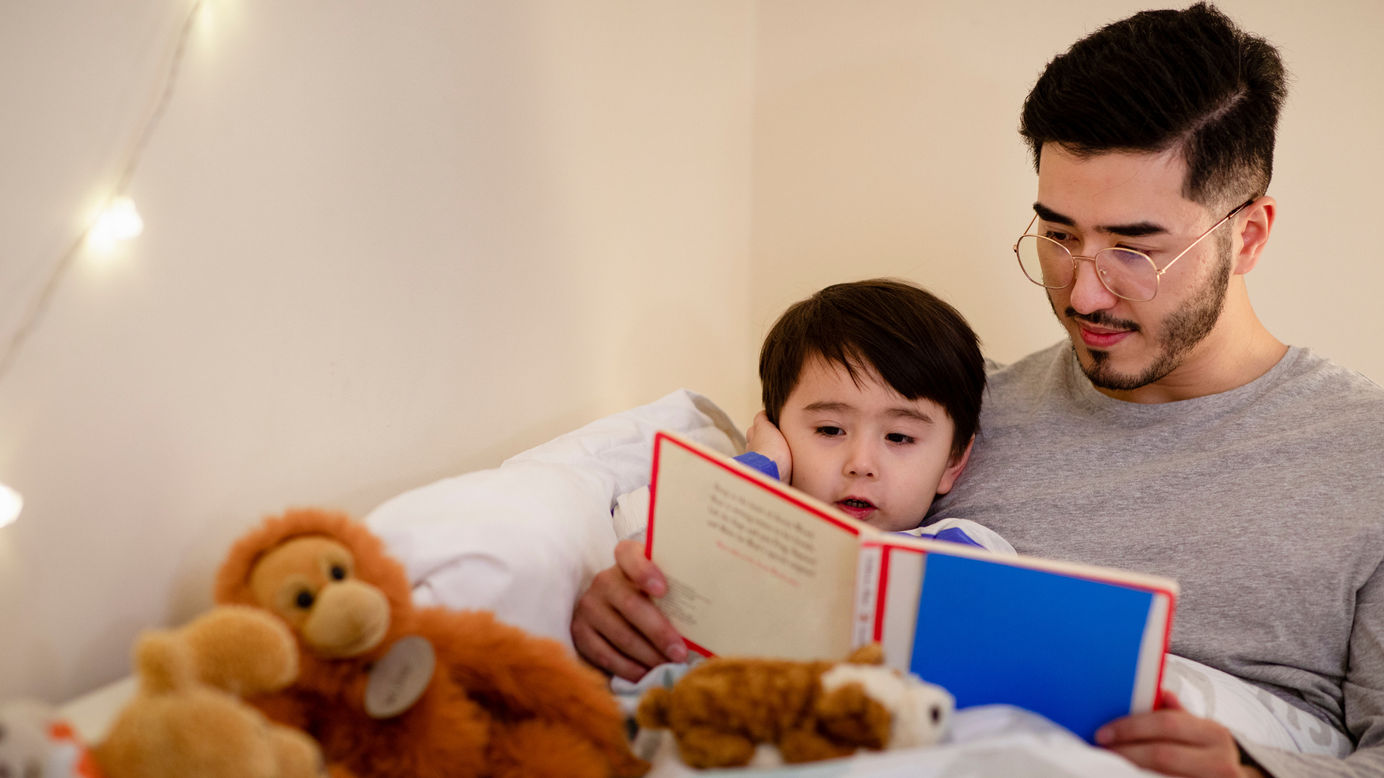
Reading to Young Kids Improves More Than Literacy — It Shapes Meaningful Human Skills
Reading aloud isn’t just about early literacy. It’s one of the simplest ways to build empathy, connection, and the foundations of calling.

When we think about reading to young children, we think about vocabulary.
Early decoding.
Stronger academics.
A head start in school.
But new research suggests something deeper is happening.
A recent study found that children who are regularly read to show stronger social and emotional skills—empathy, patience, emotional understanding—regardless of whether parents pause to ask comprehension questions.
In other words:
It’s not the interrogation.
It’s the interaction.
The simple act of sitting together with a book (e.g., sharing attention, tone, emotion, imagination) builds social intelligence in ways worksheets never could.
And this matters more than we realize.
Stories Are Social Training
When a child listens to a story, they are practicing:
- Seeing the world from someone else’s perspective
- Interpreting emotions
- Understanding conflict
- Anticipating consequences
- Naming feelings
Books are rehearsal spaces for real life.
And here’s what’s beautiful: children don’t need a parent performing like a literacy coach. They don’t need perfectly timed discussion prompts.
They need presence.
Voice.
Connection.
Shared attention.
That’s it.
Why This Matters for Gifted Development
At GiftedTalented.com, we define development this way:
Gifts × Effort = Talent
Talent × Love = Calling
Every child is born with gifts.
Some gifts are cognitive.
Some are relational.
Some are imaginative.
Some are deeply emotional.
Reading aloud activates all of them.
A child wired for language begins stretching verbal gifts.
A child sensitive to emotions begins strengthening empathy.
A curious mind begins connecting patterns.
And when this daily effort happens inside a warm relationship—wrapped in affection, safety, and joy—those emerging talents attach to love.
That’s when talent begins pointing toward calling.
Because calling isn’t just about what a child can do.
It’s about who they become while doing it.
A Quiet Encouragement to Parents
If you ever feel like you’re “not doing enough,” this is your reminder:
You don’t need to engineer brilliance every evening.
You don’t need flashcards.
You don’t need elaborate questioning techniques.
You need consistency.
Ten minutes.
A couch.
A book.
Your voice.
That’s formation.
And formation compounds.
Reading aloud is not just about raising strong students.
It’s about raising socially fluent, emotionally aware, deeply human adults.
And every child, without exception, has gifts waiting to be awakened.
Parent Takeaway
Reading together is one of the simplest, highest-leverage formation practices available in early childhood.
Not because it produces higher test scores.
But because it builds the kind of humans the world actually needs.

GiftedTalented.com
The world's fastest growing gifted & talented community