The Myth of the “Right” School
Why more intentional parents are mixing models to meet each child’s needs

For generations, schooling was treated as a single decision:
Pick a school. Commit. Endure.
But for many modern families—especially those raising gifted, sensitive, or highly individual children—that model is quietly breaking down.
Increasingly, parents are doing something once considered radical but is now becoming quietly common:
they’re mixing schooling models.
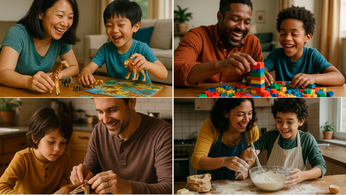
A child might homeschool in the early years, attend a public school with a gifted plan later, supplement with online or virtual classes for acceleration, and then move to a private or hybrid school when social or emotional needs shift.
This isn’t inconsistency.
It’s responsiveness.
And research suggests that when done thoughtfully, this flexible approach can meaningfully improve engagement, achievement, and well-being—particularly for children who don’t thrive in one-pace, one-path systems.
From Ideology to Reality
Many intentional parents begin with strong convictions.
Some are drawn to homeschooling for its freedom and values alignment.
Others choose private schools for smaller classes or mission-driven cultures.
Some defend public schools as essential spaces for diversity and civic life.
But lived experience—especially with multiple children—tends to soften absolutism.
Children differ. Profoundly.
Temperament.
Learning speed.
Sensitivity.
Social needs.
Motivation.
Family bandwidth.
What works beautifully for one child can quietly erode another’s confidence.
Across families who’ve experimented with multiple models, a pattern emerges:
beliefs give way to observation.
The question shifts from “What do we believe about school?”
to “What does this child need right now?”
Schools Are Not Better or Worse—They Are Different Environments
One of the most helpful reframes for parents is this:
schooling options are not a hierarchy; they are ecosystems.
Each offers distinct strengths—and distinct costs.
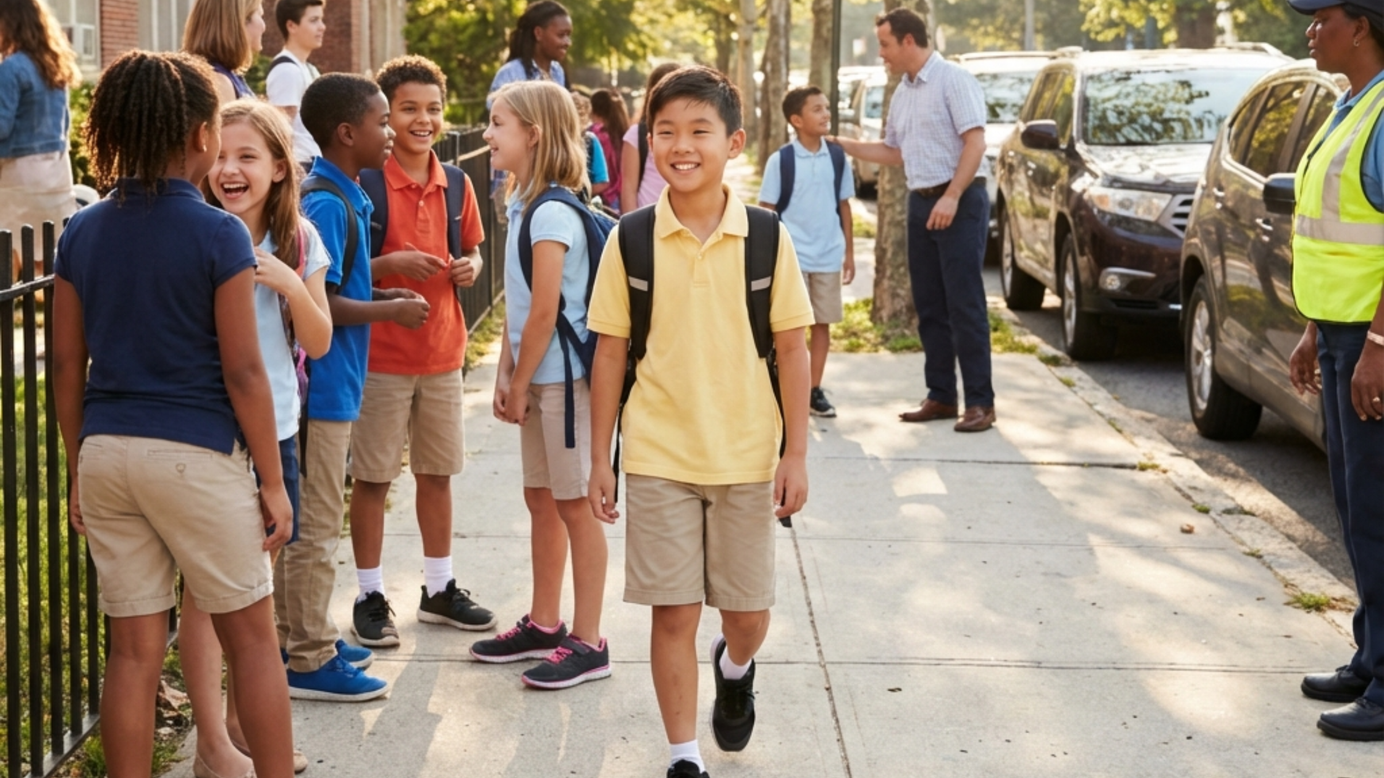
- Public schools often provide rich peer diversity, extracurriculars, and access to formal supports (special education, gifted plans, counseling). At the same time, large class sizes and standardized pacing can underserve children who need faster or more flexible learning.
- Private and charter schools may offer smaller classes, specialized missions, or advanced academics—but access is limited by cost, admissions, and uneven availability of formal services for gifted or twice-exceptional students.
- Homeschooling offers unparalleled customization of pace, content, and values, yet places heavy demands on parental time, skill, and emotional labor—especially as children grow older.
- Online and virtual schools can enable acceleration and mastery-based learning but require intentional planning to meet social and experiential needs.
None is inherently superior.
Each is a tool.
The question isn’t Which is best?
It’s Which environment fits this child, in this season?
Giftedness Makes Flexibility More, Not Less, Important
Gifted children often expose the limits of one-size-fits-all schooling earliest.
Research on differentiated instruction consistently shows that when content, process, and assessment are adapted to readiness and interest, students—especially high-ability learners—demonstrate higher engagement and deeper learning.
Without appropriate challenge, gifted students are not merely bored.
They are often misunderstood.
Families who move a gifted child between environments—perhaps accelerating online in one subject, attending public school for social life, and later choosing a specialized private program—are not “school hopping.”
They are designing a trajectory.
The most successful paths often combine:
- Academic acceleration where appropriate
- Social-emotional support, not just academic rigor
- Periodic recalibration as the child matures
Giftedness is not a static condition.
Neither should schooling be.
Family Circumstances Matter—And That’s Not a Failure
Educational ideals don’t exist in a vacuum.
Life intervenes:
- Job changes
- Health challenges
- Divorce
- New siblings
- Caregiving demands
What was once sustainable—like deeply bespoke homeschooling—may no longer be realistic.
Research and lived experience both show that parents often return to public or charter options not because they’ve “given up,” but because they need structure, supervision, and shared load.
Crucially, many children thrive in these transitions—sometimes exceeding parental expectations, particularly socially driven or extroverted kids.
Others don’t—and that feedback matters just as much.
Flexibility allows families to respond without shame.
Toward “Right-Fit” Schooling
Across studies on differentiation and hybrid learning models, a consistent theme appears:
Children do best when schooling decisions begin with the child—not the system.
Intentional parents tend to weigh:
- Temperament (introverted vs. extroverted)
- Academic profile (including giftedness or learning differences)
- Social-emotional readiness
- Family bandwidth and stability
- The actual quality of local options—not just their labels
When families view school changes as calibration rather than correction, children learn something powerful: that education is something designed for them, not imposed on them.
The Deeper Gift of Flexibility
Perhaps the most meaningful outcome of this approach isn’t academic at all.
Children who experience responsive schooling often internalize a quieter lesson:
- My needs matter
- My strengths are seen
- My struggles are not moral failures
- Learning can adapt as I grow
In a world that will demand lifelong learning, self-advocacy, and adaptability, this may be the most important education of all.
At GiftedTalented.com, we believe that discovering gifts, nurturing talents, and guiding children toward meaningful paths requires more than loyalty to any one model.
It requires attention.
Humility.
And the courage to change course when love—not ideology—demands it.

GiftedTalented.com
The world's fastest growing gifted & talented community