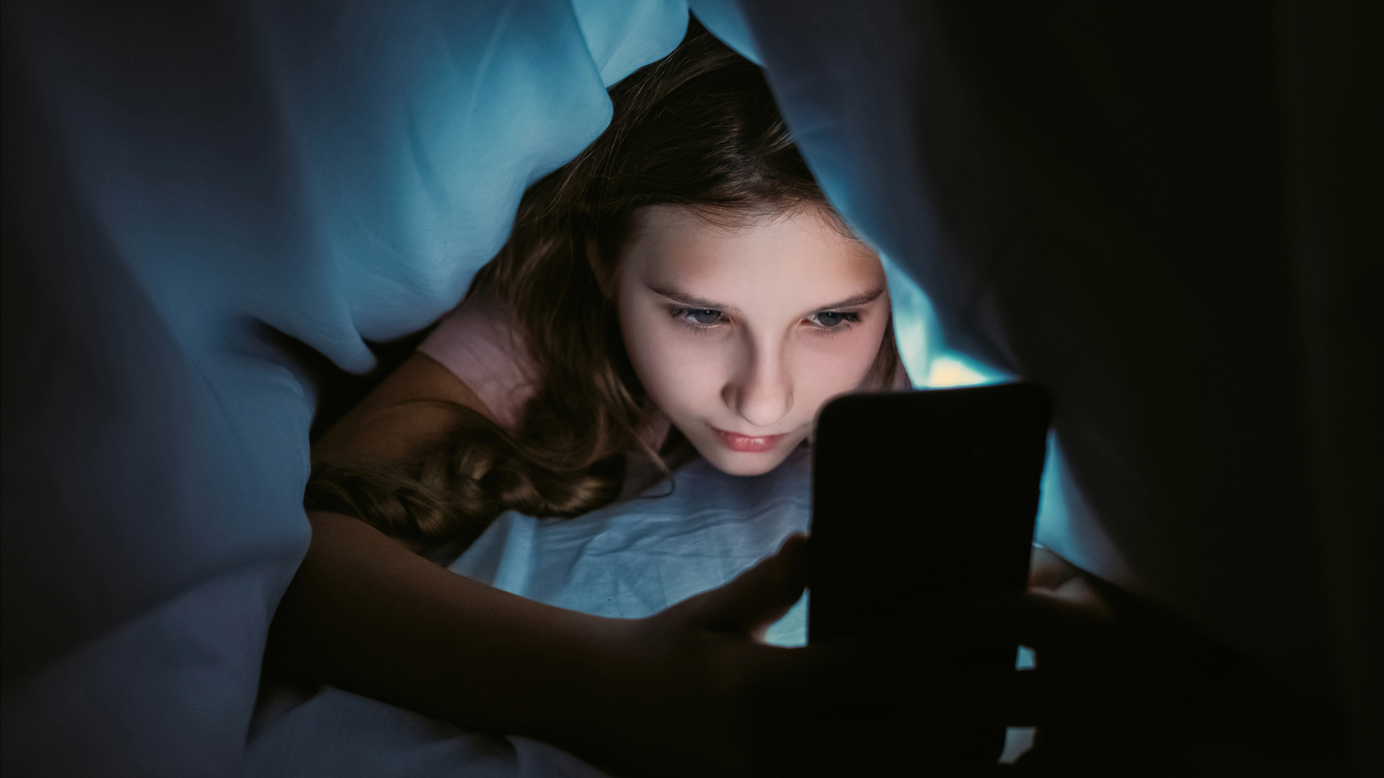
Screen Time Isn’t Just “Bad”
Screens don’t just steal time—they shape attention, emotion, and identity. A parent’s reflection on why discipline alone won’t save us.

There was a time when people called television visual poison.
I remember that phrase clearly—not because it was abstract, but because I could feel it.
As a child, I’d sit with my grandmother and watch a movie or a Korean soap opera for two or three hours straight. Nothing extreme. Nothing scandalous. Just TV.
And afterward, I’d feel… foggy. Numb. Slower.
It took time for my mind to come back online.
That was my baseline experience of television—a one-way, non-interactive, low-dopamine medium by today’s standards.
I’m being honest about this because it matters.
If that was the effect of TV then, I can only imagine what today’s children feel—what their brains feel—after years of smartphones, short-form video, infinite scroll, algorithmic feeds, and social comparison delivered 24/7, starting at ever-younger ages.
And here’s the part I don’t think we’re fully reckoning with:
It’s only going to get harder with each successive generation.
This Isn’t About “Too Much Screen Time.”
It’s about the world we're handing them.
Every generation worries about its kids. That’s not new.
What is new is that we’ve introduced a technology that:
- never gets tired
- never turns off
- never says “enough for today”
- and is explicitly designed to shape attention, emotion, desire, and identity
We didn’t just add screens to childhood.
We replaced silence, boredom, waiting, and imagination with constant stimulation.
When adults say, “Well, kids today are just different,” I want to push back.
No—they’re not different.
They’re immersed.
Immersed in a digital environment that even most adults struggle to regulate—and we expect children to self-manage it.
That’s not a discipline problem.
That’s an environmental problem.
Why the CNBC Conversation Matters—But Isn’t Enough
The recent CNBC article on lowering kids’ screen time echoes advice from people like Jonathan Haidt:
Model better habits, share devices, delay smartphones.
All of that is directionally right.
But I want to say the quiet part out loud:
Even if parents do everything right, the broader digital ecosystem is still accelerating in the opposite direction.
More immersive.
More personalized.
More addictive.
More social-comparison-driven.
More emotionally manipulative.
So while tactics matter, this is not ultimately a tactics problem.
It’s a formation problem.
What Worries Me Most as a Parent and Educator
What keeps me up at night isn’t just:
- anxiety
- attention loss
- or screen addiction
It’s the subtle erosion of inner life.
Children who:
- don’t know what it feels like to be bored
- haven’t learned how to sit with discomfort
- struggle to stay with a hard thought
- or immediately reach for stimulation when things get quiet
These are not moral failures.
They are trained responses.
When the default mode of childhood becomes distraction, we shouldn’t be surprised when focus, patience, and depth feel unnatural later on.
The Hard Truth for Parents
Here’s the uncomfortable truth I’ve come to accept:
You cannot “out-discipline” a system that is better funded, better engineered, and more psychologically sophisticated than you are.
That doesn’t mean we give up.
It means we get more intentional, not more naïve.
It means:
- thinking in decades, not months
- designing environments, not just rules
- and treating screen time as a formative force, not a neutral tool
Screens aren’t just stealing time.
They’re shaping how children think, feel, relate, and imagine the future.
A Final Thought
When people once called TV “visual poison,” they weren’t being alarmist.
They were naming a felt experience—one we’ve since normalized.
Today’s screens are not just stronger medicine.
They’re a different class of drug entirely.
If we don’t slow down and take this seriously (not with panic, but with clarity) we risk raising children who have access to everything… except themselves.
And that, to me, is the real cost of screen time.

GiftedTalented.com
The world's fastest growing gifted & talented community