
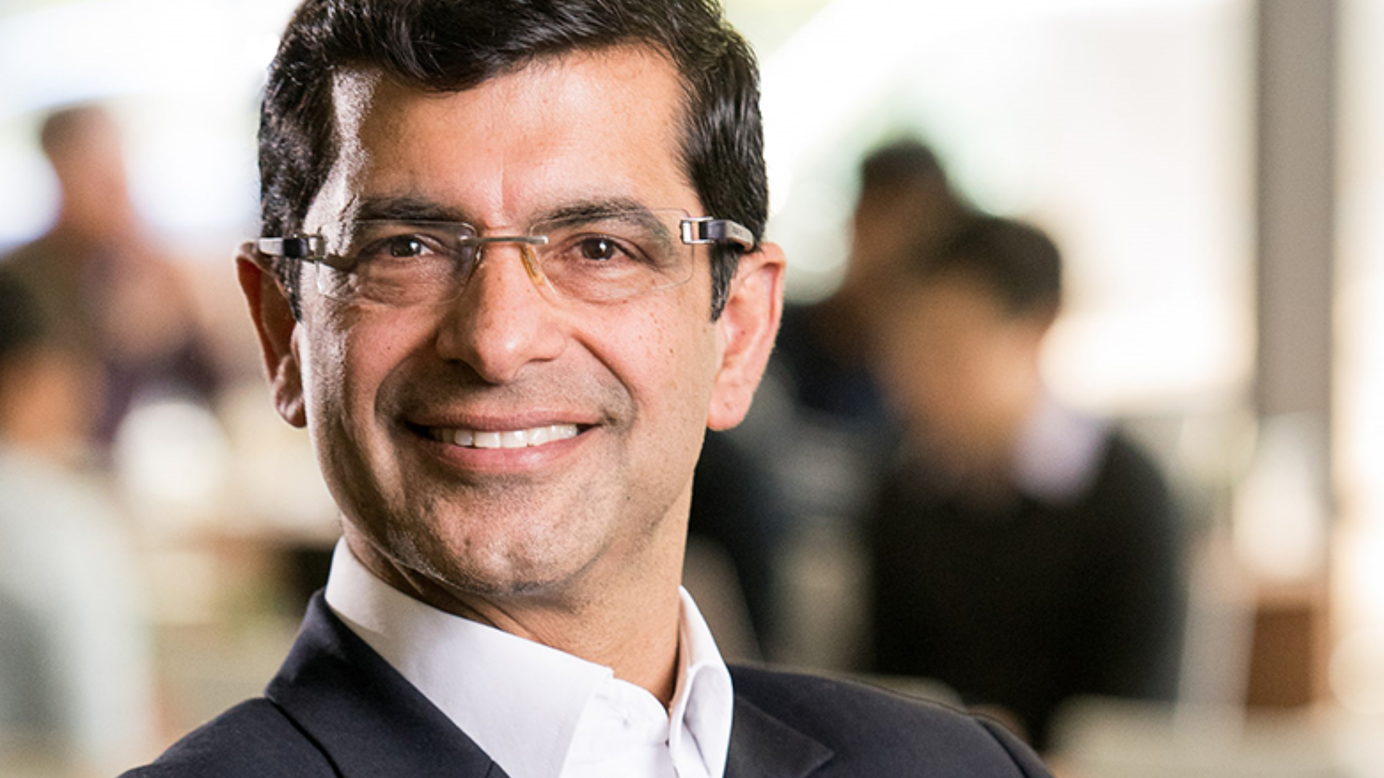
Why Shitij Kapur Says Degrees No Longer Guarantee Mobility
The King’s College London Vice-Chancellor on Degrees, Mobility, and Honest Education

When Shitij Kapur speaks about universities, he doesn’t sound like a man trying to sell certainty. He sounds like someone who has watched too many young people mistake a door for a destination.
As Vice-Chancellor of King’s College London, Kapur recently unsettled a familiar promise. A UK university degree, he argued, is no longer a passport to social mobility. It’s closer to a visa: it grants access to the competition, but guarantees nothing beyond the chance to try.
For families raised on the idea that education is the great equalizer, the metaphor lands with a thud. But for Kapur, it isn’t pessimism. It’s honesty born of long observation.
A Clinician’s Eye on Institutions
Before leading one of the world’s great universities, Kapur built his career as a psychiatrist and academic. Clinicians are trained to notice patterns others miss:
- How systems affect individuals
- How incentives shape behavior
- How unintended consequences quietly accumulate
That lens matters.
Kapur has watched higher education expand from an elite pathway into a mass system. Participation rates have climbed toward half of all young people. What once signaled rarity now signals normality. The degree hasn’t lost meaning, but it has lost scarcity.
From a clinician’s standpoint, this creates a predictable outcome: when a credential becomes common, competition simply moves elsewhere. Employers begin filtering by institution, by networks, by internships, by social capital. The promise doesn’t disappear; it relocates.
The Moment the Math Changed
Kapur often points to a generational break. There was a time (participation under 20%) when almost any degree reliably translated into professional security. The social contract felt clear: study hard, get in, move up.
But systems change faster than stories.
Today’s graduates enter a labor market shaped by credential inflation, automation, and sharp regional inequality. Many jobs that once welcomed school-leavers now require degrees as a baseline—without offering commensurate pay. Technology concentrates rewards at the top while intensifying competition below. Opportunity clusters in expensive cities, where unpaid or low-paid internships quietly exclude those without family support.
From Kapur’s view, universities cannot ethically promise outcomes they no longer control.
Why He Refuses the Comforting Lie
Calling the degree a “visa” is not an attack on higher education. It’s a refusal to indulge a comforting lie, especially one that burdens families with debt and expectations the system cannot reliably fulfill.
Kapur’s position is subtle but firm:
- Universities still matter.
- Degrees still open doors.
- But what happens during and after university now matters more than admission itself.
That shift reframes responsibility. If degrees no longer guarantee mobility, then institutions must stop acting as if access alone is success. Social mobility becomes something that has to be designed, not assumed.
Engineering Mobility, Not Assuming It
At King’s, Kapur has emphasized widening participation and widening outcomes. Outreach without attainment is hollow. Graduation without pathways is incomplete.
That means investing in:
- Structured work-linked learning
- Employer partnerships that go beyond prestige hiring
- Support systems that help students convert potential into capability
- Civic and professional networks that don’t rely on inherited advantage
In this model, the university is not a ticket booth. It’s a bridge—one that must be intentionally built and actively maintained.
A Harder (but More Honest) Story for Families
For GiftedTalented.com families, Kapur’s argument cuts to the heart of a modern anxiety: Am I doing enough? Am I choosing wisely?
His answer isn’t to abandon university. It’s to ask better questions.
Not:
“Will a degree guarantee success?”
But:
“What kind of learning, in which environment, with what real-world experiences, will help this young person grow into their strengths, and navigate a crowded world?”
That question honors both ambition and realism. It recognizes that talent still needs opportunity. But opportunity now requires more than a credential.
Why This Story Matters
Kapur’s insight doesn’t diminish education. It restores its dignity.
By naming the degree a “visa,” he reminds us that mobility is a journey, not a stamp. Entry matters, but so does preparation, guidance, and what you do once the gate opens.
For students with gifts to develop, families seeking wisdom, and institutions wrestling with their purpose, that clarity is not discouraging.
It’s freeing.
Because once we stop treating the degree as the destination, we can finally focus on what education is meant to cultivate: not guarantees, but growth, discernment, and the courage to build a life beyond the label.

GiftedTalented.com
The world's fastest growing gifted & talented community