When Everyone Used AI, One Stanford Student Chose to Think for Herself
As AI tools become part of everyday learning, parents face a new question: When should our children use them? When should they struggle on their own? One Stanford student’s decision offers a powerful lens.

In 2022, when generative AI tools like ChatGPT first became ubiquitous on college campuses, many students embraced the new tech with enthusiasm.
But one student, Rosana Maris Arias, took a very different path.
By junior year at her university, nearly every classmate was using AI to summarize readings, draft papers, or brainstorm ideas.
“It felt like everyone had an assistant in their pocket,” Rosana remembers.
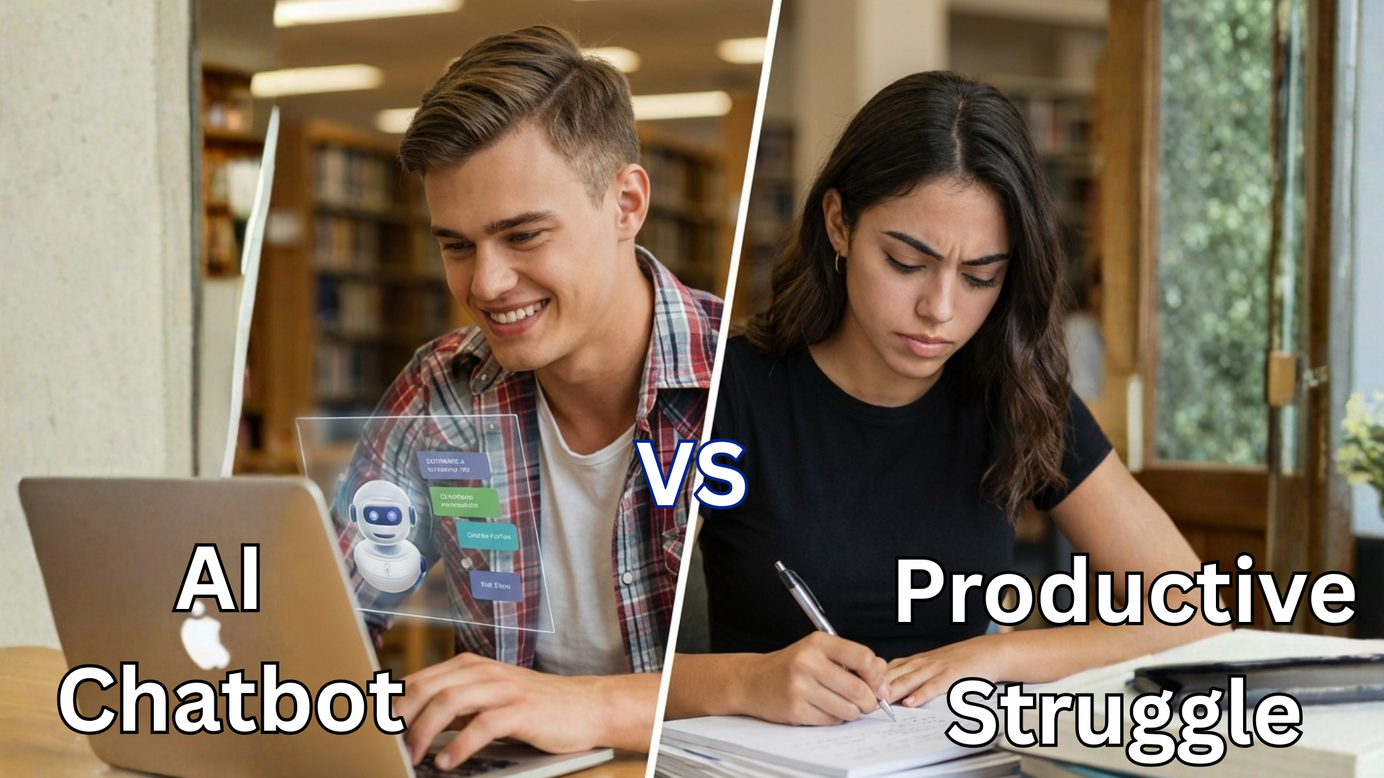
Instead of leaning into it, she refused to use it for her schoolwork at all, even when professors said it was allowed.
Why Rosana Said “No”
Rosana was a literature major with a creative writing focus. She loved the craft of language—the feel of a sentence, the struggle to find exactly the right word, the clarity that comes only through wrestling with ideas on her own.
When classmates casually handed their reading summaries to an AI, Rosana wondered:
Why am I here if I’m outsourcing the very thing I came to learn?
For her, writing wasn’t just about getting a grade.
It was about developing thinking itself.
She believed that leaning on AI to do the heavy lifting, especially on assignments meant to stretch her mind, would quietly erode the very skill she was trying to build.
At a university known for intellectual rigor, she felt a responsibility not just to earn grades, but to grow.
The Hard Work That Paid Off
It wasn’t easy.
Deadlines loomed.
Peers seemed to finish faster.
The temptation to ask ChatGPT a “quick assist” was always there.
But Rosana stayed the course.
She met every deadline with her own words. She revised drafts late into the night. She attended workshops. She sought feedback from professors who pushed her thinking deeper.
She didn’t just complete assignments.
She learned to articulate ideas with precision and confidence.
Within the walls of her campus, filled with the legacy of great writers, she began to find her own voice.
Years later, she still credits that decision as formative. Not just academically, but personally. The discipline shaped her confidence as a communicator and thinker.
What This Means for Gifted Learners
Rosana's story isn’t about rejecting technology.
It’s about knowing when challenge matters.
AI can accelerate output.
It can summarize faster.
It can generate ideas in seconds.
But some skills must be earned slowly.
Writing is not typing.
It is thinking.
If AI does the thinking, what exactly is being trained?
For gifted students and the families who guide them, Rosana's experience raises a key question:
What do we want our children to own themselves?
Is it the speed of finishing homework?
Or is it the capacity to think clearly, argue persuasively, and express uniquely?
Technology will only get smarter.
But the human mind, sharpened by persistence, reflection, and struggle, remains irreplaceable.
In the end, how Rosana learned to think for herself has been a gift that keeps paying dividends, long after the assignments were done.
Technology will shape our children's future.
But discipline will shape who they become.
Rosana Maris Arias is a writer from Los Angeles, CA. She’s written for Knock LA, the Nerds of Color, and The Stanford Daily. She holds a degree in English Literature and Creative Writing from Stanford University.

GiftedTalented.com
The world's fastest growing gifted & talented community