
Where Our Kids’ Talents Will Matter Most in the Age of AI
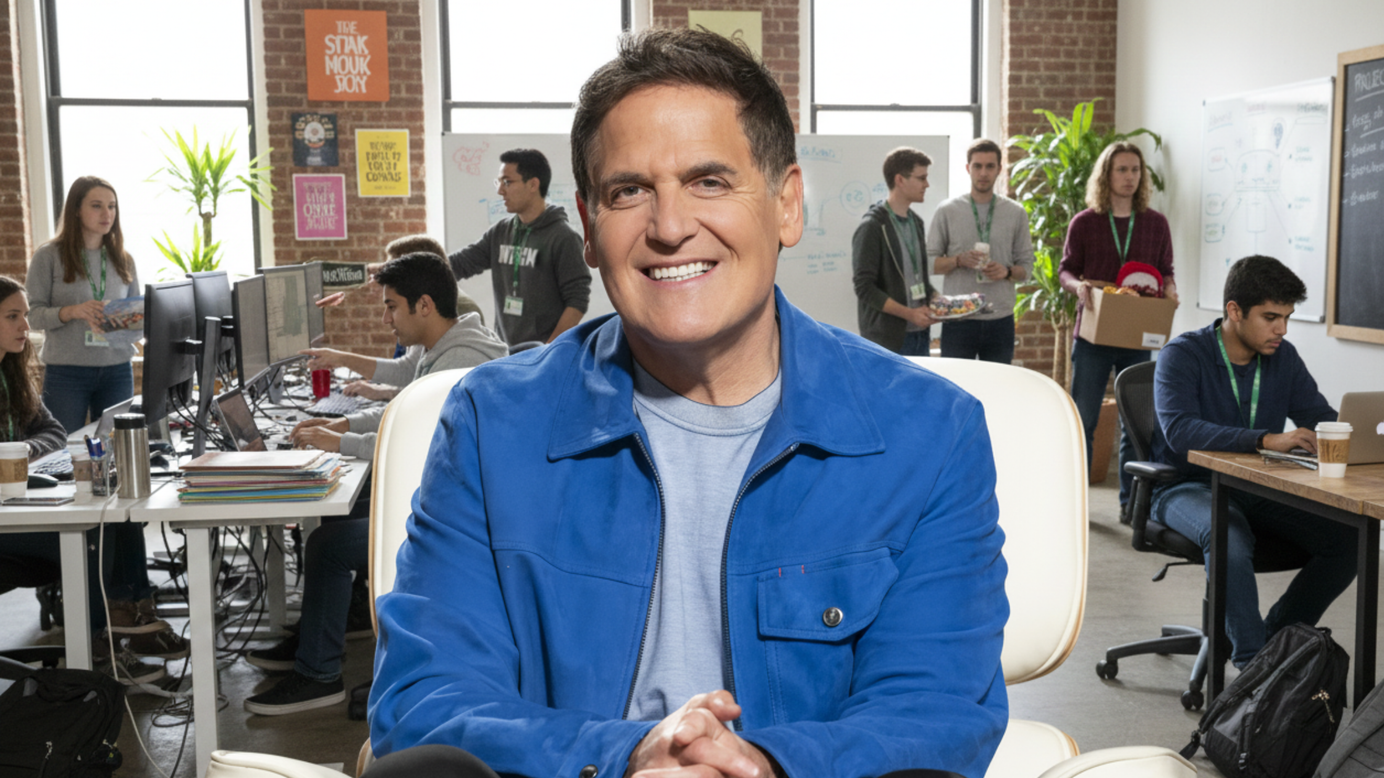
Why Mark Cuban thinks talent belongs in small companies—and why intentional parents should pay attention.

The Quiet Shift in Where Talent Creates Value
For years, parents of gifted children have asked the same question:
What kind of job should my child aim for?
Big tech? A prestigious brand? A “safe” employer with name recognition?
Recently, Mark Cuban offered a very different answer—one that matters deeply for families raising gifted, curious, and capable young people.
His advice to new graduates is simple but counter-cultural: go small.
Not because small companies are easier, but because that’s where gifted young people can create the most value in the age of AI.
What Mark Cuban Is Really Saying
Cuban argues that the biggest opportunity for new graduates isn’t at large enterprises, but inside small and medium-sized businesses (SMBs) that are overwhelmed, understaffed, and under-automated.
Why?
Because AI (especially agentic AI) can now handle tasks end-to-end: scheduling, summarizing, responding, tracking, optimizing. And most small organizations don’t know how to use it yet.
Large companies already have teams, budgets, and systems. They don’t need a 22-year-old to rethink workflows.
Small companies do.
And they love people who can walk in, understand how the business actually works, and quietly make it run better.
For gifted young people, this isn’t just job advice. It’s a redefinition of where talent matters most.
The New Gifted Edge Isn’t Test Scores—It’s Leverage
In a world where AI can write, calculate, summarize, and search instantly, traditional markers of giftedness are no longer enough.
The new edge looks different:
- Seeing patterns in messy systems
- Noticing where friction wastes human energy
- Asking, “Why is a person doing this at all?”
- Translating abstract tools into practical outcomes
This is why Cuban’s insight resonates so strongly with gift-based education.
Gifted children often excel at systems thinking, rapid learning, and connecting ideas across domains. Those are precisely the skills needed to design, deploy, and supervise AI agents responsibly.
In other words:
Your child doesn’t need to compete with AI.
They are naturally positioned to orchestrate it.
Why “Go Small” Is Developmentally Powerful
For intentional parents, the deeper insight isn’t about company size.
It’s about learning environments.
In small organizations, gifted young people experience:
- Real constraints (limited time, money, staff)
- Immediate feedback (what works vs. what doesn’t)
- Visibility (their contribution is obvious and measurable)
- Responsibility earlier than peers in large systems
When a teen or college student helps a small business save 10 hours a week using an AI agent, the learning is concrete. Confidence is earned, not symbolic.
This is very different from being a tiny cog in a massive corporate machine.
When AI Becomes the “Junior Employee”
Sam Altman has compared AI agents to junior employees, capable of handling tasks but needing guidance, structure, and oversight.
That analogy is powerful for parents.
If AI is the intern, then your gifted child’s role shifts from doing the work to:
- Designing workflows
- Delegating intelligently
- Monitoring quality and ethics
- Deciding what humans should still own
These are higher-order skills—judgment, responsibility, and discernment—exactly what many gifted children crave but rarely get to practice early.
The question for parents becomes:
Where can my child safely practice being the designer, not just the performer?
A Tough Job Market Makes This More Urgent
The labor market for young people is tightening. Job postings are down, competition is up, and credentials alone no longer guarantee opportunity.
The good news? A growing share of graduates are already applying to smaller organizations, where demonstrated capability matters more than pedigree.
For gifted learners, this means portfolios beat resumes.
A transcript says, “I completed requirements.”
A project says, “I created value.”
What Intentional Parents Can Do—Practically
This isn’t about pushing children into premature career paths. It’s about designing exposure.
Here are concrete ways parents can respond:
1. Start Local and Small
Encourage your teen to observe a real organization they already know:
a tutoring center, music studio, nonprofit, family business, or church office.
Ask:
Where is someone repeating the same task every week?
2. Frame AI as a Helper, Not a Threat
Position AI agents as tools that free humans for creativity, care, and judgment. Not as replacements.
This reduces fear and builds responsibility.
3. Emphasize Reflection, Not Just Results
After any project, help your child reflect:
- What part energized you?
- Where did you notice patterns quickly?
- What ethical questions came up?
That reflection is how gifts turn into talents.
4. Think in Terms of Experiments, Not Careers
Cuban’s advice isn’t about locking in a future. It’s about learning fast, adding value early, and building confidence through real contribution.
The Bigger Reframe for Gifted Families
The most important shift may be this:
Stop asking:
“What prestigious role should my gifted child aim for?”
Start asking:
“Where can my child’s gifts help real people do meaningful work better?”
In the age of AI, the answer is often smaller, closer, and more human than we expected.
And for gifted learners, that’s not a downgrade.
It’s an invitation to lead earlier, and more wisely.

GiftedTalented.com
The world's fastest growing gifted & talented community