
When Entrepreneurship Is the Wrong Answer
When a family’s business dream reveals the quiet line between perseverance and wisdom.

In this issue of Stories, we follow a Vietnamese family whose dream of building a children’s playground became an unexpected lesson in love, risk, and discernment. Based on the lived experiences of Pham Phuc and his family, the story reflects a question parents everywhere face: when to keep believing—and when to let go.
The Empty Playground
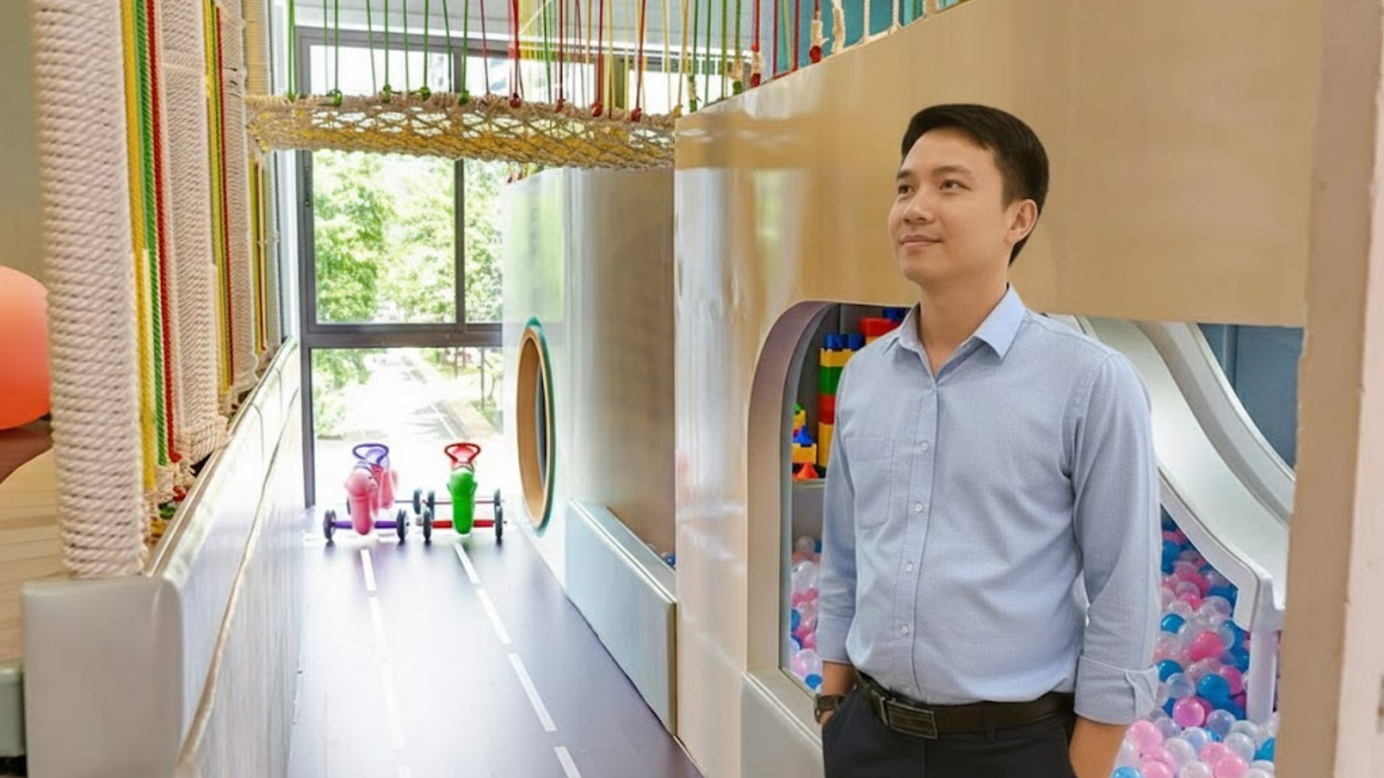
On most evenings, the playground was quiet enough to hear the air conditioner hum. Five tickets a day, on average—barely enough to cover the lights, let alone the rent. Inside sat a bright ball pit, a bounce house, and a father who had once had a stable office job and a simple dream:
“I’ll build a place where kids can play, and my wife can run it from home.”
What began as a tender, family-centered plan slowly became a financial free fall, as savings disappeared into rent, equipment, and hope. It was, on paper, a business story—but for the family living it, it was really about something else: how far loving adults will go for an idea they believe will give children a better life.
The Dream Behind the Business
The playground was never just about tickets. It was about identity.
A father who had spent years behind a desk wanted to pour himself into something “real,” something children could see and touch. A mother wanted work that kept her close to home and close to her own kids, a different kind of “career ladder” built around family rhythms instead of corporate calendars.
If you squint, you can see a familiar pattern many families of gifted and driven children know well:
- A strong desire to build an environment where kids can roam, explore, and “be kids.”
- A belief that if you sacrifice enough—time, money, stability—the right environment will unlock potential.
But environments are not magic wands. When the numbers never added up, no amount of love could change the fact that rent was $1000 month, while revenue hovered around $12 a day.
When Grit Becomes a Trap
The family did what many persistent, high-achieving people do when something falters: they doubled down. They added pool tables for parents, a fried chicken and milk tea stall, anything that might broaden the appeal. Each new idea layered more complexity and cost onto a model that was already fundamentally misaligned with demand—weekday traffic was thin, weekends were unpredictable, and free alternatives like parks and malls were always just a short ride away.
Psychologists call this the sunk cost fallacy: the more you’ve invested in something, the harder it becomes to walk away, even when walking away is the wisest choice. In gifted education, a softer version shows up when:
- A child grimly pushes through an activity they no longer love because “we already paid for the season.”
- Parents keep funding a path (competitions, coaching, lessons) long after the child’s interest has shifted, because turning back feels like “wasting” what has been spent.
In both cases, grit—so often celebrated—can morph into a trap if it is not anchored to honest feedback and present-moment reality.
Lessons for Families Raising Gifted Kids
This family’s playground loss was painful. But it holds surprising wisdom for anyone trying to nurture gifts and talents in children.
- Love the child more than the project.
The father loved his idea so much that it became hard to see clearly that the idea was not working. With gifted kids, it is easy to fall in love with the image of “the prodigy,” “the young founder,” or “the champion,” and harder to stay attuned to the child who may be tired, bored, or quietly longing for something different. - Decide using future value, not past investment.
A simple question the family struggled to ask was: “Knowing what we know now, would we still choose this today?” That same question can guide families deciding whether to continue a demanding program, competition track, or instrument: if the only reason to continue is “we’ve already spent so much,” it may be time to pause. - Teach kids that quitting can be wise, not weak.
By the time many ventures shut down, families have lost not only money but months or years of bandwidth they could have invested elsewhere. Children who see adults course-correct—grieve, learn, and then pivot—absorb a powerful message: courage is not just holding on; sometimes it is choosing to let go. - Model reflective risk-taking.
The original leap into entrepreneurship was not the problem; the absence of guardrails was. For gifted and driven kids, families can model healthier experiments: try a bold project with a clear time frame, defined budget, and pre-agreed check-in points where everyone has permission to say, “This is not working; what did we learn?”
Closing: Gifts Beyond Success
When the playground finally closed, the family did not get their savings back. The investment—financially—was gone. What remained was a quieter kind of return: a hard-won understanding of limits, of the difference between perseverance and denial, of how love expressed through sacrifice can still misfire if it refuses to listen to reality.
For families raising gifted and talented children, that understanding is itself a kind of talent: the ability to notice when a dream is nourishing growth, and when it is simply draining the family’s energy and joy. Learning to honor both starts and endings may be one of the most important gifts adults can offer the next generation.

GiftedTalented.com
The world's fastest growing gifted & talented community