When the World Stops Coming to the US
As fewer international students come to the US, the global classroom is thinning. What this shift means for parents raising globally minded children.

What the Decline in International Students Really Means for Our Children
For decades, many American parents operated with a quiet assumption:
If my child gets into a good U.S. college, the world will come to them.
International classmates. Global perspectives. Cross-cultural friendships forged late at night in dorms and labs. Exposure to how different societies think, argue, build, and dream.
That assumption is now under pressure.
Recent data show that fewer international students are choosing (or able) to come to the United States, and the decline is not marginal. New student arrivals are down sharply. Visa friction has increased. Costs and uncertainty have pushed families toward other countries.
This isn’t just an enrollment story.
It’s a formation story—one that matters deeply for parents raising gifted, curious, globally oriented children.
Why This Matters for Developling Talent
Every child is born with gifts.
What varies isn't whether a child has them, but whether those gifts are given the conditions to grow into real-world talents.
Many gifts develop best in environments that expose children to complexity, difference, and dialogue, including:
- Curiosity, strengthened by encountering unfamiliar ideas and ways of thinking
- Empathy, formed through real relationships with people who see the world differently
- Systems thinking, sharpened by navigating cultural, social, and institutional complexity
- Creativity, expanded through contrast, tension, and cross-pollination of perspectives
- Leadership, developed by learning to listen, adapt, and act responsibly across difference
In these environments, young people learn to test ideas, refine judgment, and see beyond their own assumptions. Over time, gifts mature into talents that serve both the individual and the world.
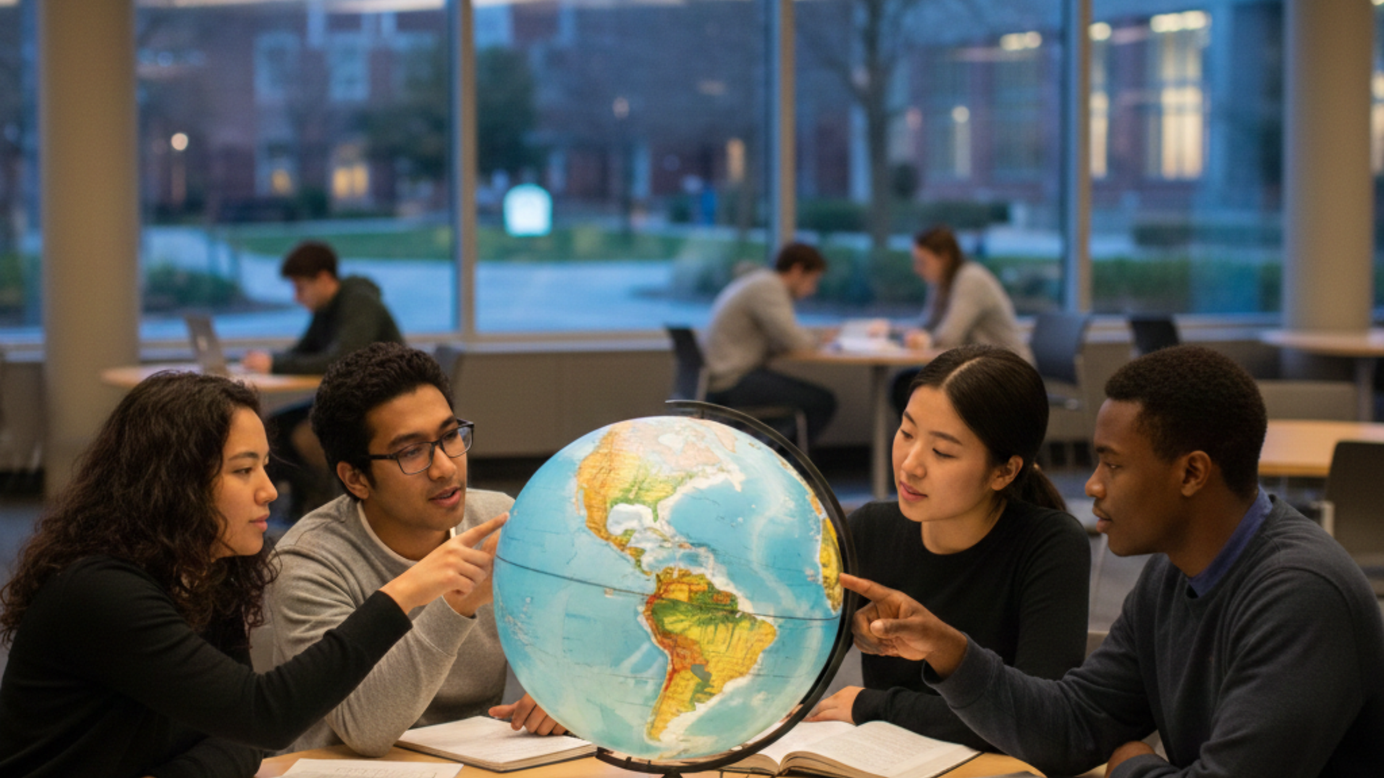
For decades, US campuses quietly supported this kind of formation. They functioned as global classrooms. Students often learned as much from peers from Lagos or Seoul as they did from formal coursework. Cultural fluency, perspective-taking, and intellectual humility were formed through daily, unplanned encounters—not special programs.
As international student presence declines, several subtle but important shifts occur:
1. Fewer Everyday Global Encounters
Cross-cultural exposure becomes something students schedule rather than something that happens naturally. Global understanding moves from lived experience to abstraction—less conversation, more theory.
2. Narrower Peer Networks
Unless families act intentionally, the future collaborators, researchers, founders, and civic leaders a child meets may come from increasingly similar cultural and national backgrounds. This narrows the relational soil in which many talents grow.
3. A Signal Shift
Children are highly perceptive. When borders tighten and pathways close, they absorb messages—often unconsciously—about belonging, openness, and where opportunity lives. Those signals shape not only where they study, but how they imagine their place in the world.
For families focused on discovering gifts and nurturing them into talents, these shifts matter. Talent does not develop in isolation. It is formed through encounter, contrast, and connection.
This Is Not an Argument Against the US
To be clear: this is not a rejection of American higher education.
The US still offers extraordinary institutions, faculty, and research ecosystems. Many gifted students will thrive here.
But it is an argument against default thinking.
The era when global formation happened automatically (simply by attending a US campus) is fading.
Intentional parents must now architect what used to be ambient.
A Reframe for Intentional Parents
At GiftedTalented.com we often return to a simple progression:
Gifts are discovered.
Talents are nurtured.
Direction is intentional.
The current moment asks parents to apply that same logic to global development.
Giftedness Is Global by Nature
Curiosity does not respect borders.
Neither does creativity, moral reasoning, or scientific imagination.
If fewer international students are coming to here (to the US), then global formation must travel outward—by design.
Five Thoughtful Responses for Intentional Families
1. Detach “Global” from a Single Country
A globally educated child is not defined by where they study, but by how deeply they engage across difference.
That may include:
- Non-US universities or joint-degree programs
- Hybrid or international summer programs
- Serious online collaboration with peers abroad
Think in portfolios, not flags.
2. Look for Real Interaction, Not Marketing Language
Many institutions still highlight diversity numbers. Ask instead:
- Do students work together across cultures?
- Are global experiences required, funded, and mentored?
- Is intercultural learning embedded—or optional?
Formation happens through shared struggle and collaboration, not proximity alone.
3. Build Global Muscles Earlier
Waiting until college is increasingly late.
Middle- and high-school pathways now matter more:
- International research projects
- Olympiads, Model UN, and global competitions
- Language learning tied to real human connection
- Cross-border mentorship and collaboration
For gifted children, early exposure compounds.
4. Teach Systems Awareness
This moment is a living lesson in how policy, economics, and culture intersect.
Invite your child into that analysis:
- Why do student flows change?
- How do visa rules shape opportunity?
- What happens when talent migrates elsewhere?
This builds strategic literacy, not cynicism.
5. Choose Institutions that are Resilient
Prestige alone is no longer enough.
Look for schools that:
- Are financially diversified
- Continue investing in student formation
- Demonstrate long-term commitment to global engagement
Stability supports talent development.
A Quiet Opportunity Hidden in the Shift
There is a hopeful angle here.
When global exposure no longer happens by accident, families who act intentionally gain an advantage—not in status, but in depth.
Children raised with deliberate intercultural formation often develop:
- Stronger moral imagination
- Greater adaptability
- Deeper empathy
- A clearer sense of vocation beyond national narratives
In a fragmented world, these are not “nice to have” traits.
They are leadership capacities.
A Closing Thought for Parents
Every generation of parents faces a different landscape.
This one is asking a harder question:
If the world is no longer coming to our children—how will we bring our children to the world?
Not through panic.
Not through prestige chasing.
But through thoughtful, values-anchored design.
That is the work of intentional parenting.
And it has never mattered more.

GiftedTalented.com
The world's fastest growing gifted & talented community