Admissions Officers Can Tell
Your Child's AI-Polished Essay Won't Survive 2026

The next admissions edge may not be perfect writing. It may be unmistakably human writing.
A growing number of students are discovering a strange problem.
They ask AI to clean up an essay, improve a paragraph, or make their writing sound more polished. The result often sounds stronger. More fluent. More organized. More “academic.”
But then they read it back and realize something uncomfortable:
"It does not sound like me."
One student described the problem plainly:
AI-assisted writing can sound better, but also generic, “like anyone could’ve written it.”
This is not just a writing issue. It is an identity issue.
For students, writing has never been merely about grammar, vocabulary, or sentence structure. Writing is how they learn to think. It is how they practice judgment. It is how they discover what they actually believe. It is how they begin to sound like a person with a mind of their own.
AI can help students write faster. But used carelessly, it can also smooth away the very signals that make a student’s work feel alive.
The rise of “AI-smoothed” writing
Generative AI is now part of everyday student life. A 2025 KPMG Canada report found that 73% of Canadian students use generative AI for schoolwork, up from 59% in 2024 and 52% in 2023. Nearly half of student users said turning to AI is now their “first instinct” when given an assignment.
That shift matters because students are not only using AI to check grammar. They are using it to brainstorm ideas, organize essays, summarize research, rewrite paragraphs, and make their work sound more impressive.
At first glance, this can look like a win. Students produce cleaner writing. Teachers receive more polished assignments. Parents see better-looking work.
But better-looking work is not always better learning.
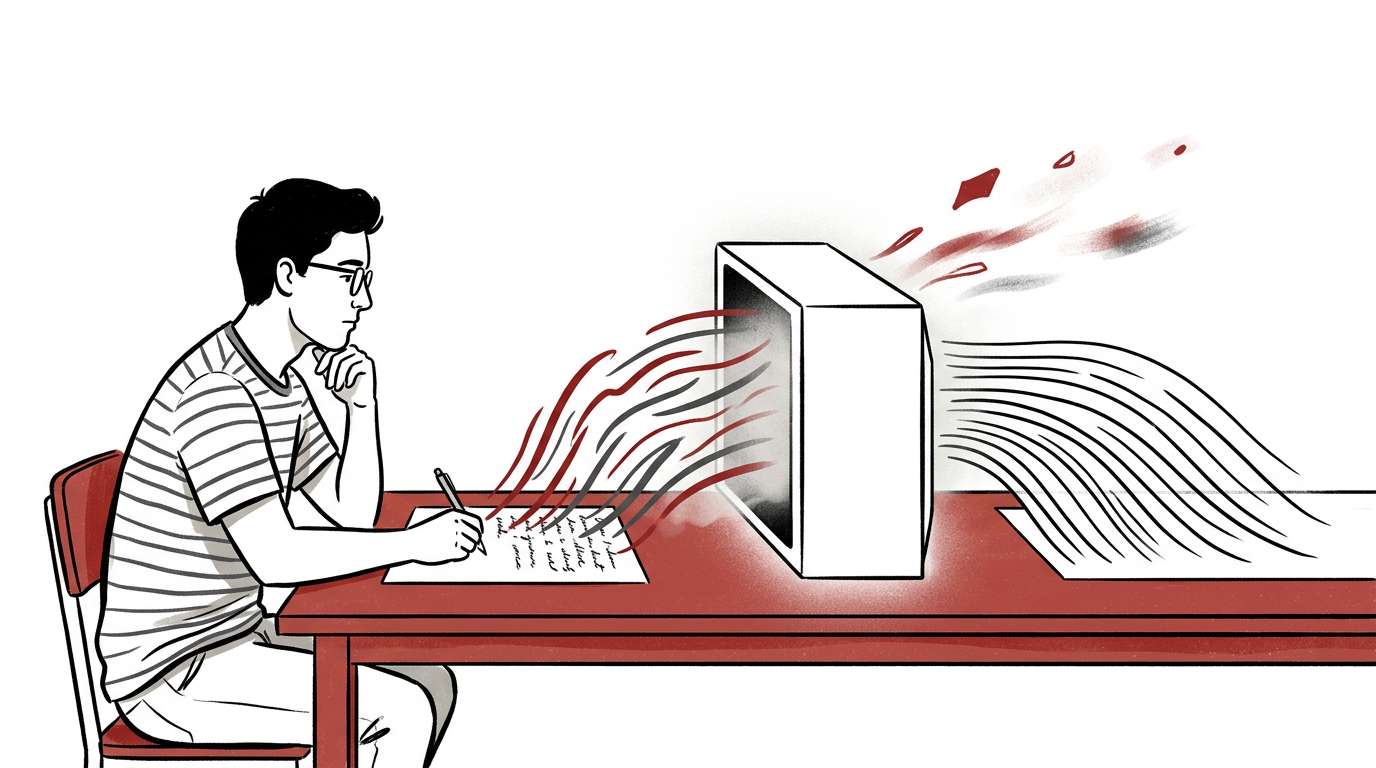
The attached research synthesis makes the deeper concern clear. AI can improve “surface-level fluency” while weakening the development of voice, ownership, and intellectual independence. It describes a paradox at the center of AI-assisted writing: the same tools that make student writing “sound strong” may also erase the writer.
What gets lost when writing becomes too polished
Human writing often contains hesitation, texture, and risk.
A student might write:
“This may suggest that social media affects how teenagers understand friendship.”
AI may revise it into:
“This demonstrates that social media significantly shapes adolescent friendship patterns.”
The second sentence sounds stronger. But it may also say more than the student actually knows. The uncertainty is gone. The student’s developing judgment is gone. The sentence now sounds authoritative, but the authority may not belong to the student.
That is the danger.
Strong student writing does not always sound perfect. Sometimes it sounds tentative because the student is still thinking. Sometimes it sounds personal because the student is connecting ideas to experience. Sometimes it sounds uneven because the student is still learning how to carry an argument.
Those imperfections are not always weaknesses. They can be evidence of growth.
When AI removes too much of that texture, students may submit work that sounds more mature than they are. The paper improves, but the writer does not.
The problem is not AI. The problem is outsourcing the self.
This does not mean students should never use AI.
For many students, AI can be genuinely helpful. It can clarify confusing instructions, explain difficult concepts, suggest structure, and help multilingual students express ideas more confidently. Used well, AI can lower barriers.
But there is a difference between using AI as a coach and using AI as a substitute self.
A coach asks better questions.
A substitute gives you better-sounding answers.
A coach helps students find their voice.
A substitute replaces it.
The educational risk is not that students will use AI. The risk is that students will slowly forget what their own thinking sounds like.
Recent research on college students’ AI use suggests many students already feel this tension. One 2026 study found that students often use AI even when they believe it may undermine their learning, especially under pressure from deadlines, grades, and peer norms. The researchers also found that unclear policies and “AI shame” push much of this use underground.
In other words, many students are not using AI from a place of confidence. They are using it from a place of pressure.
That should concern parents and educators.
Why this matters for gifted and talented students
Gifted students are often especially vulnerable to this problem.
They are used to producing excellent work. They feel pressure to sound advanced. They may be praised for polished output long before they are challenged to develop original voice.
AI can intensify that pressure.
A gifted student can use AI to make an essay sound like a college admissions brochure, a research abstract, or a professional op-ed. But if the writing no longer carries the student’s own curiosity, confusion, conviction, humor, background, or point of view, something important has been lost.
Gifted education should not be about helping students sound impressive.
It should be about helping students become real.
Real thinkers.
Real writers.
Real builders.
Real contributors.
That means students need more than polished sentences. They need authorship.
The new admissions advantage: authentic voice
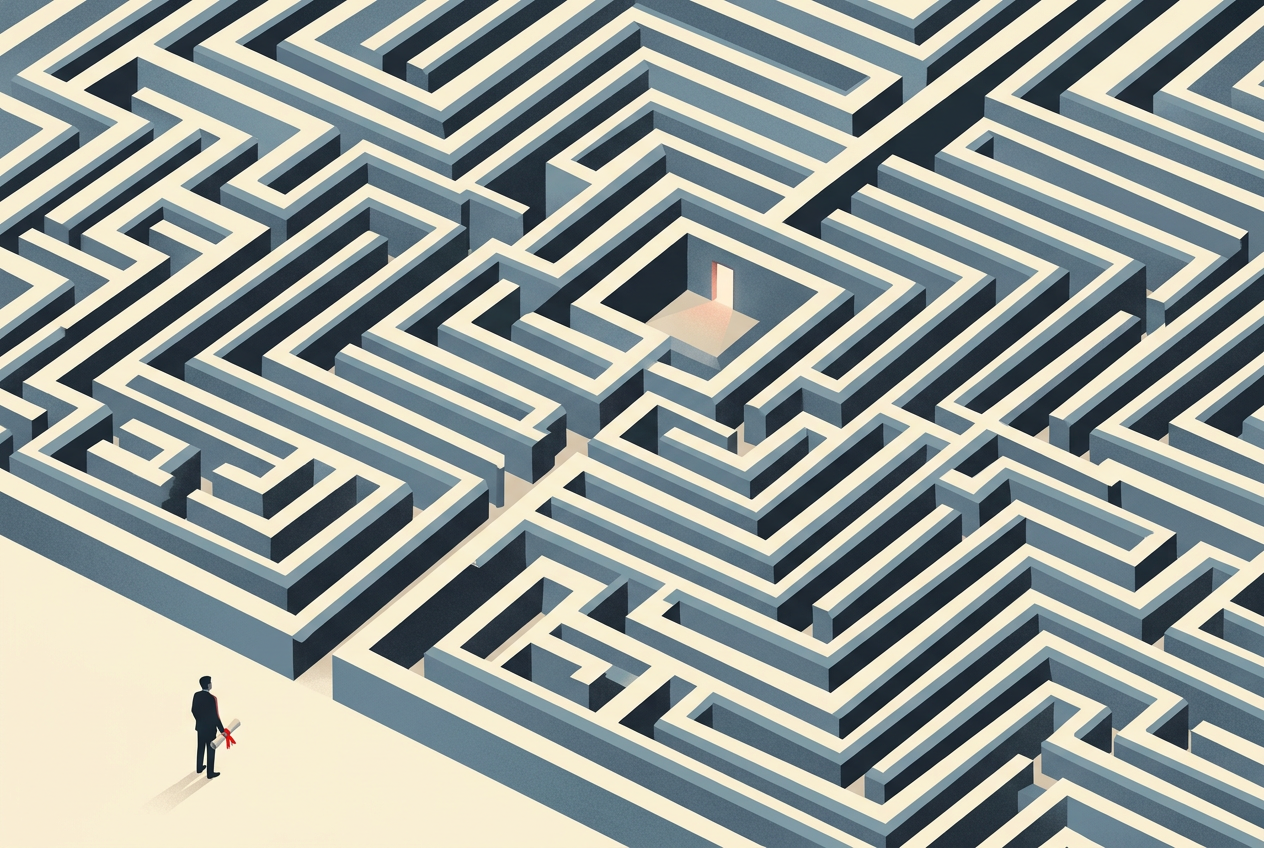
In a world where every student can generate a polished essay, polish becomes less impressive.
Admissions officers, scholarship committees, research mentors, and internship reviewers will increasingly look for something harder to fake: a real human voice.
That does not mean casual writing. It does not mean sloppy writing. It means writing that carries evidence of a real person behind the words.
Authentic student writing often has several traits:
It reveals a specific mind, not a generic achiever.
It includes concrete details that only this student would notice.
It shows the student’s reasoning, not just the conclusion.
It preserves some of the student’s natural rhythm and vocabulary.
It can be defended in conversation.
That last point may become one of the most important tests of all.
If a student cannot explain a sentence, defend a claim, or describe how an idea developed, the writing is not finished—even if it sounds polished.
A better way to use AI
The goal is not to ban AI. The goal is to keep the student visible.
A healthier approach is to teach students to use AI in ways that strengthen authorship rather than replace it.
Students can ask AI to:
- Explain a concept they do not understand.
- Identify where an argument is unclear.
- Ask them questions about their draft.
- Suggest places where evidence is weak.
- Point out where the writing sounds generic.
- Help them compare two versions and decide which sounds more like them.
But students should be cautious about asking AI to simply “make this better.” That instruction often translates into: make this more generic, more formal, more confident, and less personal.
A better prompt is:
“Help me improve clarity while preserving my voice. Do not make this sound generic. Ask before changing the meaning.”
Even better, students should write a first draft without AI before using AI at all.
The first draft is where the student meets their own mind.
AI can enter later — as editor, challenger, or coach — but not as the original author.
What parents and educators should ask
Instead of asking only, “Did you use AI?” adults should ask better questions:
- Can you explain what you wrote?
- Which ideas came from you?
- Which parts did AI help with?
- What did you reject from AI’s suggestions?
- Where does this still sound like you?
- What did you learn by writing this?
These questions move the conversation from surveillance to formation. The goal is not merely to catch misuse. The goal is to help students become stronger thinkers.
The future belongs to students with voice
AI will make average writing easier.
It will make polished writing common.
It will make generic excellence abundant.
But it will not make a student wise. It will not make a student original. It will not make a student courageous enough to say, “This is what I think, and here is why.”
That still has to be developed.
For gifted and talented students, the challenge of the AI era is not simply to produce better work. It is to remain present in the work they produce.
The question is no longer just:
“Is this writing strong?”
The better question is:
“Is the student still there?”
Because in the age of AI-smoothed writing, the most valuable student work may not be the work that sounds the most polished.
It may be the work that sounds unmistakably human.

GiftedTalented.com
The world's fastest growing gifted & talented community