When AI Makes Student Writing Stronger but Less Human
AI can polish a student’s writing, but it cannot discover a student’s voice. What can we do?

A student writes a rough paragraph.
The idea is there, but the sentence is clumsy. The argument has promise, but the structure needs work. So the student asks AI to clean it up.
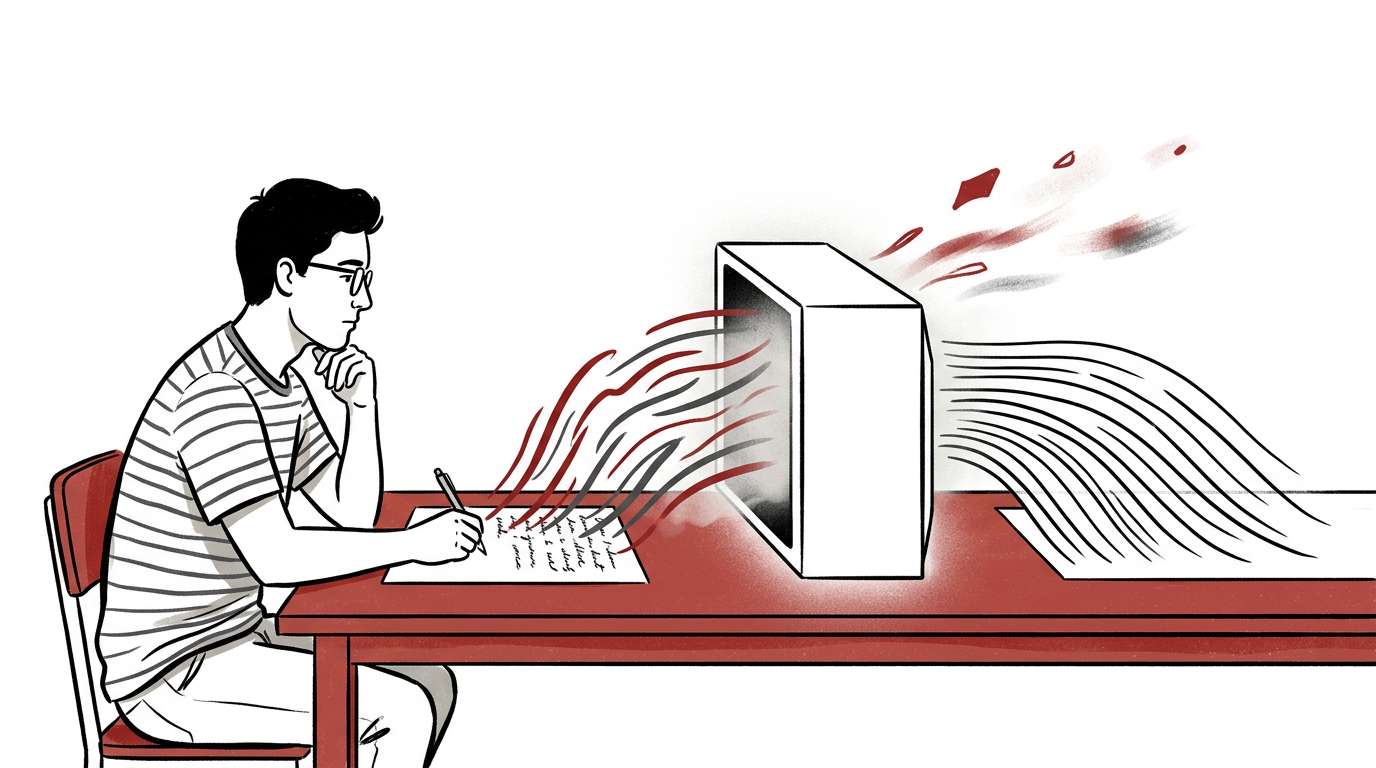
Within seconds, the paragraph sounds better.
More polished.
More confident.
More academic.
But then the student reads it again and feels something strange.
It sounds strong.
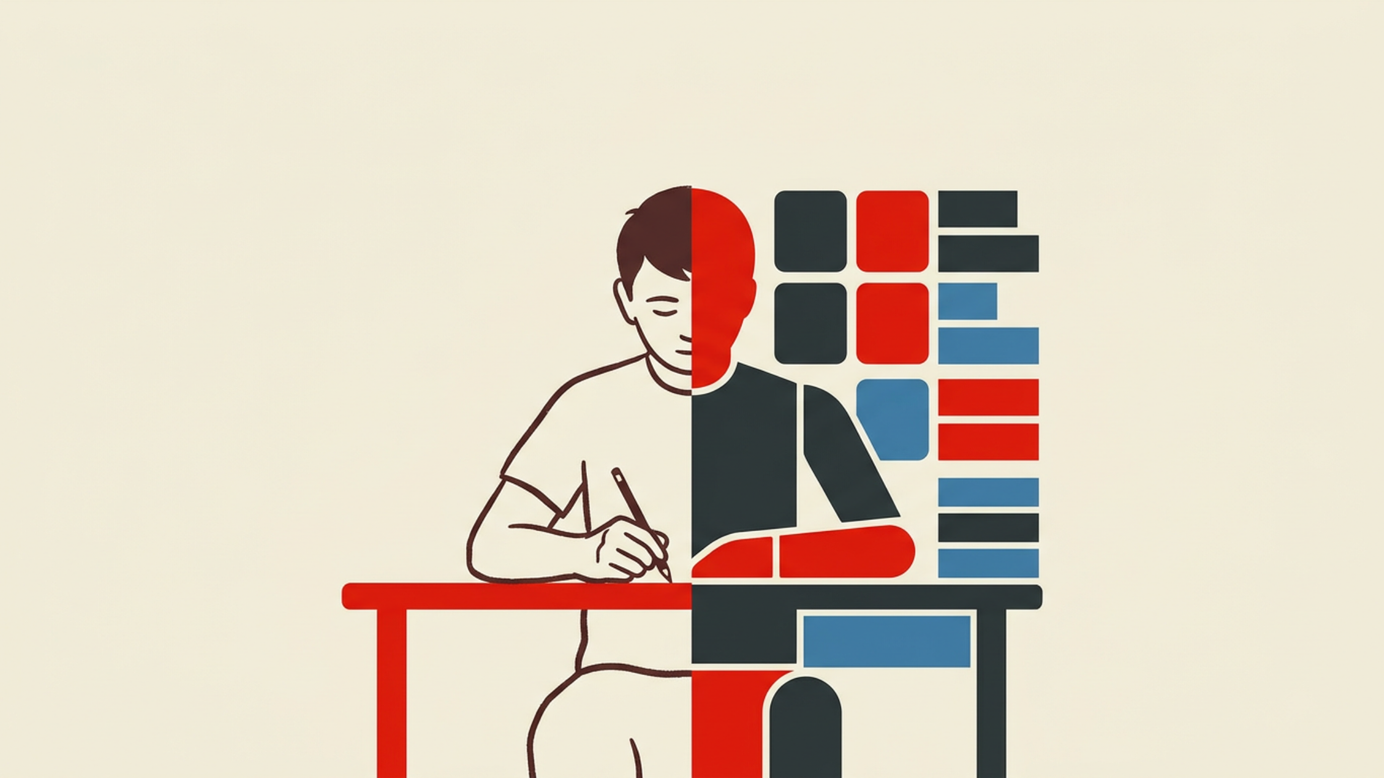
But it no longer sounds like me.
That tension may become one of the defining educational questions of the AI era. Not simply whether students are cheating. Not simply whether they are using tools too much. But whether, in the process of making their work sound more impressive, they are slowly losing the ability to recognize their own voice.
For families, educators, and students, this matters deeply.
Because writing is not just a school task.
Writing is one of the ways young people discover what they think, what they believe, what they notice, and who they are becoming.
The Problem Is Not Just Cheating
Much of the conversation around AI in schools has focused on academic integrity.
- Did the student write it?
- Did AI write it?
- Is this allowed?
- Can teachers detect it?
Those questions matter. But they do not go far enough.
Nurul Hassan Mohammad, a PhD candidate at the Ontario Institute for Studies in Education at the University of Toronto, raises a more human concern. In his research with STEM college students, many students described AI-polished writing as technically better but personally unfamiliar. The writing sounded competent, but it did not sound like them.
That phrase should stop us.
Because the goal of education is not merely to produce competent-looking work. The goal is to form competent people.
A student who submits a polished essay but cannot explain the argument has not grown in the same way as a student who struggled through the sentence, wrestled with the idea, revised the claim, and learned to stand behind the final version.
AI can help students write.
But it can also help them skip the very struggle through which voice is formed.
Writing Is Identity Work
When students write, they are doing more than arranging words.
They are practicing how to think.
They are learning how to make a claim, qualify it, defend it, revise it, and take responsibility for it. They are learning when to say “I argue,” when to say “this suggests,” when to admit uncertainty, and when to speak with conviction.
That is not just grammar.
That is formation.
In academic writing, students are also learning how to belong to a field. A young scientist learns how to describe evidence carefully. A young historian learns how to interpret sources. A young entrepreneur learns how to frame a problem. A young theologian learns how to handle meaning, mystery, and conviction.
Each discipline has its own voice. But each student must also find a way to bring his or her own voice into that discipline.
This is why AI-smoothed writing can be so seductive and so dangerous.
It often makes writing sound more authoritative. But authority in the sentence is not the same as authority in the student.
A paragraph can become stronger while the writer becomes less present.
The Rise of Generic Excellence
AI is very good at producing what might be called generic excellence.
It can make a sentence clearer. It can organize ideas. It can remove awkward transitions. It can make a student sound more polished, mature, and professional.
For many students, especially those still learning English or still learning the conventions of academic writing, this can be helpful. We should not pretend otherwise. AI can lower barriers. It can reduce intimidation. It can give students a model of structure and clarity.
But there is a cost when the tool becomes the voice.
Many AI-polished paragraphs share a familiar sound: smooth, balanced, confident, slightly impersonal, and oddly interchangeable. The writing is not bad. In fact, that is part of the problem. It is good enough to pass.
But it may not be alive.
It may not carry the student’s uncertainty, curiosity, cultural background, humor, conviction, or intellectual fingerprint.
The danger is not that every student will become a plagiarist.
The danger is that many students will become curators of competent language they did not fully author.
Gifts Need a Voice
At GiftedTalented.com, we often return to a simple framework:
Gifts x Effort = Talent
Talent x Love = Calling
AI complicates this framework in important ways.
A student may have a gift for observation, but AI may flatten the observation into generic language.
A student may have a gift for argument, but AI may replace a developing argument with a more polished one the student cannot fully defend.
A student may have a gift for storytelling, but AI may smooth out the very oddness, rhythm, and specificity that made the story powerful.
This matters because gifts are not always polished at first.
In fact, many gifts first appear as awkwardness.
The student asks unusual questions.
The sentence is messy but alive.
The idea is not fully formed but original.
The voice is uneven but unmistakably personal.
If we teach students to run every rough thought through AI too quickly, we may accidentally train them to distrust the early signs of their own giftedness.
A gift often begins as something raw.
Talent is what happens when that raw gift is developed through effort.
But if AI removes the struggle too early, students may get the appearance of talent without the formation of talent.
The New Skill: Knowing What to Keep
The answer is not to ban AI from student writing.
That is neither realistic nor necessarily wise.
The better answer is to teach students how to use AI without surrendering authorship.
Students need a new kind of literacy. Not just digital literacy. Not just AI literacy. They need authorial literacy.
They need to learn how to ask:
- Does this still sound like me?
- Do I understand every sentence?
- Can I defend this claim out loud?
- What did AI remove that I actually wanted to keep?
- Where did AI make me sound more certain than I really am?
- Where did AI make my writing smoother but less specific?
- Where did my own insight disappear?
These questions are not anti-AI.
They are pro-formation.
A calculator can help a student compute, but the student still needs number sense. A GPS can help a person navigate, but the person still needs a sense of direction. AI can help a student revise, but the student still needs a voice.
The tool should serve the student’s development.
It should not replace it.
What Parents Can Do
Parents do not need to become AI experts to help their children.
They can begin with a simple practice: ask the student to explain the writing out loud.
Not as an interrogation. Not as a trap. But as a way of reconnecting the student to the work.
Ask:
- What were you trying to say here?
- Which sentence feels most like you?
- Which sentence feels least like you?
- What did AI improve?
- What did AI change too much?
- What part of this argument do you actually believe?
- What part are you still unsure about?
These questions help students remember that writing is not just a product to submit. It is a mirror of thought.
Parents can also encourage students to keep a “before AI” draft. The rough draft matters. It shows the student’s original thinking before the polish. Over time, comparing the rough draft with the AI-assisted version can teach students how revision works, what clarity looks like, and where their own voice tends to disappear.
The goal is not to shame students for using AI.
The goal is to help them remain visible in their own work.
What Educators Can Do
Teachers and professors can also respond more creatively.
Instead of only asking, “Did you use AI?” they can ask, “How did you use AI?”
Students can submit a short reflection with an assignment:
- What did AI help you improve?
- What suggestions did you reject?
- Where did you restore your own wording?
- What part of the final draft are you most responsible for?
- What claim can you defend without looking at the paper?
This shifts the focus from detection to development.
Educators can also design assignments that make process visible: outlines, annotated drafts, oral defenses, revision notes, and reflective comments. These practices remind students that writing is not just the final artifact. It is the path by which the student learns to think.
In the AI era, the most important evidence of learning may not be the polished essay.
It may be the student’s ability to explain how the essay became what it is.
The Calling Question
There is a deeper issue here than writing.
A student’s voice is connected to calling.
Calling is not merely what you are good at. It is what you are willing to take responsibility for. It is the place where talent meets love, conviction, and service.
But responsibility requires ownership.
If students get used to outsourcing not only grammar but judgment, tone, argument, and self-expression, they may become less practiced at the very habits calling requires.
A calling cannot be generated for you.
It has to be discovered, tested, named, refined, and lived.
That process requires a voice.
Not a perfect voice. Not always a polished voice. But a real one.
The student who says, “This sounds better, but it does not sound like me,” is not merely complaining about style. That student is noticing something spiritually and developmentally important.
The work improved.
But the self disappeared.
Education should not celebrate that trade too quickly.
Better Writing Is Not Enough
AI will remain part of education. Students will use it. Teachers will use it. Parents will use it. Institutions will adapt, slowly and unevenly.
The question is not whether AI belongs in learning.
The question is what kind of learners we are forming with it.
If AI helps students clarify their thinking, strengthen their arguments, and become more aware of their own voice, it can be a powerful tool.
But if AI trains students to value smoothness over substance, confidence over conviction, and polish over presence, then we will have gained efficiency while losing something far more important.
The future does not belong to students who merely sound intelligent.
It belongs to students who can think, speak, write, build, and serve from the deepest place of who they are.
AI can polish a sentence.
But it cannot discover a student’s calling.
That work still belongs to the student.

GiftedTalented.com
The world's fastest growing gifted & talented community